


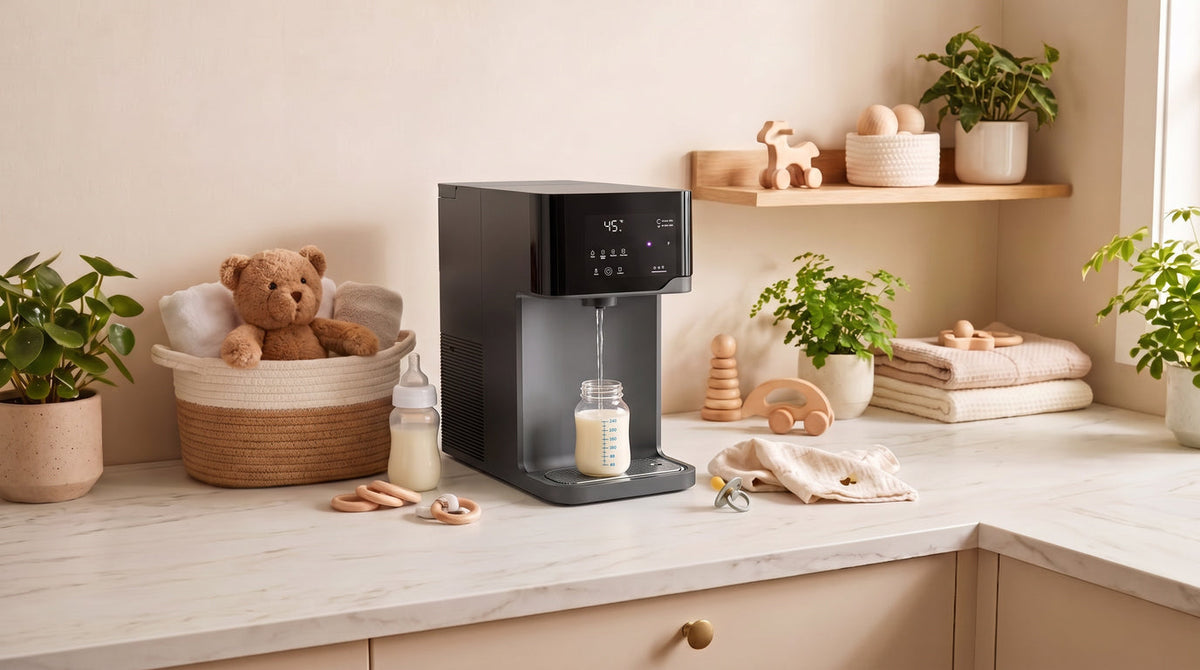
Choosing water for baby formula is about more than finding a clean source. Parents also need to understand how powdered formula should be prepared, why water temperature matters, and what household filtration can realistically achieve.
Across Europe, recommendations differ between countries and may vary according to an infant's age and health. At the same time, a water filter for baby formula is not a substitute for correct preparation and hygiene.
1. What Makes Water Suitable for Preparing Powdered Formula?
Why Water Quality Is Only Part of Formula Safety
Water used to prepare powdered infant formula should come from a source considered safe for drinking and suitable for infant feeding under local guidance. In most households connected to a compliant public water supply, the local water-quality report is a useful starting point.
However, water quality can vary with local conditions. Older plumbing may introduce lead, while some water sources may require monitoring for nitrate, pesticides, or other contaminants. If a water-quality notice identifies a problem, follow the local authority's advice rather than assuming that boiling or household filtration will resolve it.
A family water purifier may help address specific water-quality concerns, but its suitability depends on the contaminants present and the system's verified treatment performance. For families looking for safe water for kids, the first step is to understand their local water quality and address any identified concerns with appropriate, verified treatment.
Water quality is only one part of formula safety. The powder itself, feeding equipment, hands, and preparation surfaces can also introduce microorganisms. Even water that meets drinking-water standards does not make powdered formula sterile.
Why Powdered Formula Is Not Sterile
Powdered infant formula is manufactured under strict hygiene controls, but it is not sterile. Harmful microorganisms, including Cronobacter sakazakii, can occasionally be present and may cause serious infections, particularly in newborns and other vulnerable infants.
This is why formula preparation guidance considers both water quality and the temperature at which powder is mixed. Where health authorities recommend hot water, the heat helps reduce the risk from bacteria that may be present in the powder.
The international infant-formula recalls that began in December 2025 illustrate another limitation of preparation temperature. The recalls involved cereulide, a heat-stable toxin produced by certain strains of Bacillus cereus. Recalled formula must not be used; heating it does not make it safe.
Check official recall notices and follow instructions for the specific product and batch. Safe preparation practices reduce certain risks, but they cannot compensate for a contaminated product.
2. What Parents Need to Know About Water Temperature
Why Preparation Guidance Differs by Country and Infant Risk
European families may encounter different recommendations because national authorities consider the risks of microbial contamination, the needs of different infants, and the preparation instructions for particular products.
| Guidance | What parents should know |
|---|---|
| United Kingdom | The NHS recommends freshly boiled water cooled for no more than 30 minutes, so it remains at least 70°C when mixed with powdered formula. |
| Ireland | The HSE recommends a similar approach, using freshly boiled water that remains at least 70°C when the powder is added. |
| Germany | BfR guidance for healthy, full-term infants recommends using previously boiled drinking water as the starting point and following the formula manufacturer’s mixing-temperature instructions. It considers mixing temperatures of approximately 20–50°C sufficient for this group. |
Sources: NHS formula preparation guidance, HSE Ireland, and German BfR guidance.
These recommendations should not be treated as interchangeable. The German guidance cited above concerns healthy, full-term infants. Premature babies, newborns, infants with weakened immune systems, and babies with specific medical needs may require additional precautions.
If you travel or move between European countries, check the local health authority's guidance rather than assuming that the same preparation routine applies everywhere. When national guidance and the instructions on a particular formula product appear to conflict, seek advice from a qualified healthcare professional.
Why Boiling Water and Mixing Formula Are Different Steps
Boiling and mixing serve different purposes. Boiling can reduce microbiological risks in the water itself, while mixing at a specified temperature may also help reduce bacteria that could be present in powdered formula.
Filtered water is not automatically sterile, and water dispensed at a convenient temperature has not necessarily undergone the heat treatment required by local guidance.
For example, under NHS guidance, parents should use fresh tap water, boil it, and allow it to cool for no more than 30 minutes before adding the powder. The formula must then be cooled to a safe feeding temperature.
Always follow the applicable preparation instructions and measure the water and powder accurately. Adding extra water or powder changes the formula's intended concentration and can be harmful to the baby.
Why Mixing Temperature and Feeding Temperature Are Not the Same
The temperature required for mixing formula is different from the temperature at which it should be fed.
When preparation guidance requires hot water, parents should complete the mixing step first and then cool the prepared formula safely. Before feeding, test a few drops on the inside of the wrist. The formula should feel warm rather than hot.
Never use a microwave to warm a bottle, as uneven heating can create hot spots. A convenient hot-water setting does not remove the need to cool the feed or check its temperature before feeding.
Where Bottle Cleaning and Sterilisation Fit Into the Process
Water treatment cannot replace good feeding hygiene. Wash your hands, clean the preparation surface, and wash and sterilise bottles, teats, and other feeding equipment according to local guidance.
Prepare feeds as needed, follow the applicable cooling and storage instructions, and discard leftover formula as directed. Bacteria can multiply in prepared formula, making handling and storage important even when the original water source is suitable.
3. What Filtration Can—and Cannot—Change
Which Dissolved Substances Can Reverse Osmosis Reduce?
A reverse osmosis purifier uses a semipermeable membrane to reduce many dissolved substances in water. Depending on the membrane, system design, and operating conditions, RO treatment can reduce substances such as certain dissolved salts, nitrate, fluoride, and some heavy metals. Some systems are also tested for the reduction of particular PFAS compounds.
Performance varies by contaminant, so parents should look for evidence supporting the specific reduction claims relevant to their local water supply. No single treatment claim should be interpreted as proof that a system removes every possible contaminant.
RO treatment may be useful when a household has an identified water-quality concern or wants additional treatment for everyday drinking water. It is not a substitute for investigating a contamination notice or following local public-health advice.
Why Filtered Water Does Not Replace Formula Preparation Guidance
Filtration and heat treatment address different risks. A filter may reduce certain chemical contaminants, while an appropriate preparation temperature helps address microbiological risks associated with powdered formula.
Even a high-performance water filter for baby formula cannot guarantee that the powder, bottle, teat, or preparation surface is free from contamination. Likewise, UV treatment within a water dispenser does not establish that the prepared feed is sterile.
The right approach is to assess water quality separately from formula preparation. Use a suitable water source, maintain any treatment system correctly, and follow the relevant health authority's instructions for mixing, cooling, and handling formula.
Why a TDS Reading Cannot Confirm Infant Water Safety
Total dissolved solids (TDS) indicates the combined concentration of dissolved substances in water, commonly estimated from electrical conductivity. A lower reading can help show that a treatment system has reduced dissolved-solids levels.
However, TDS does not identify every substance present, establish the concentration of every individual contaminant, or confirm microbiological safety. A low reading is therefore not proof that water is safe for an infant.
Parents should use reliable water-quality reports and contaminant-specific test results when necessary. TDS monitoring is best understood as one indicator of water treatment performance, not a comprehensive safety test.
4. Where a Countertop RO System Fits Into Family Life
When Household Water Treatment May Be Worth Considering
A family water purifier may be worth considering when a household has a documented need for additional treatment or wants a convenient way to manage drinking water for everyday use.
For renters and families who prefer not to install an under-sink system, a countertop design may be more practical. Before choosing one, consider available counter space, water capacity, filter replacement costs, maintenance requirements, and verified contaminant-reduction performance.
For parents, convenience matters, but it should support rather than complicate the established formula preparation routine.
What to Check Before Choosing a Countertop RO System
A practical checklist includes:
Confirm which contaminants the system is designed and tested to reduce.
Check the actual dispensing range and whether it suits your intended uses.
Understand what the readings measure and what they cannot establish.
Look for clear replacement guidance and filter-life reminders.
Check whether the system includes a post-treatment stage and what it is designed to do.
Consider dispensing volumes, available space, and household water needs.
For formula preparation, pay particular attention to the temperature range. A system with a maximum setting below 100°C cannot be described as dispensing boiling water simply because it has a hot-water function.
What the Hydrofast C300 Water Purifier Offers for Everyday Family Life
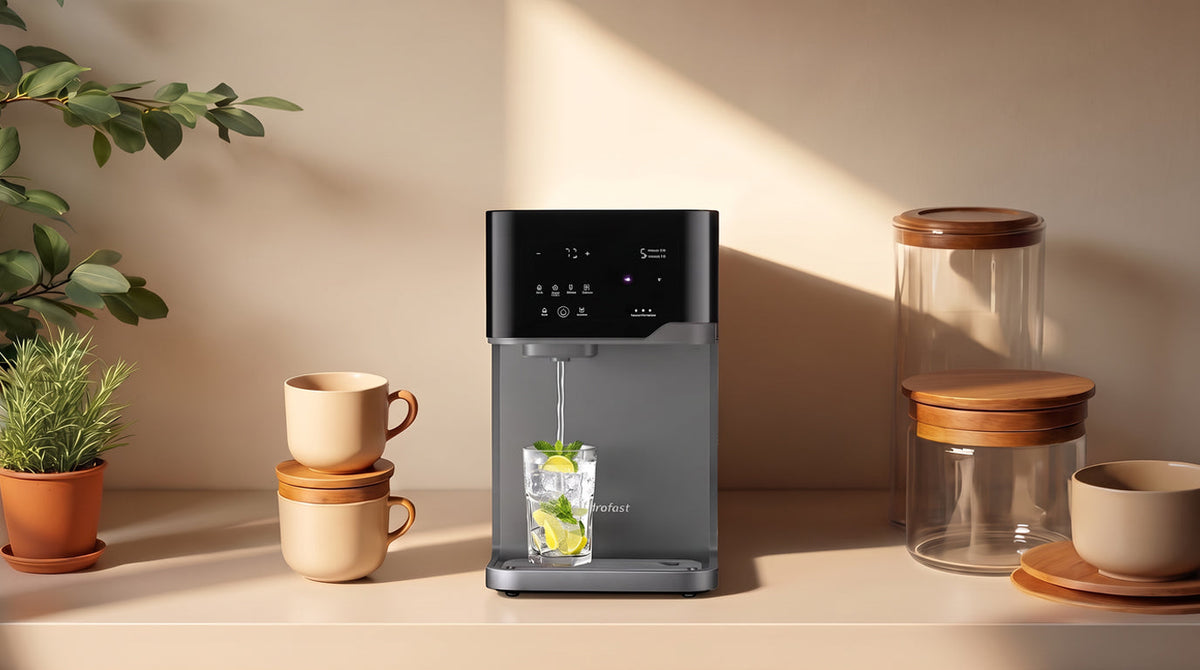
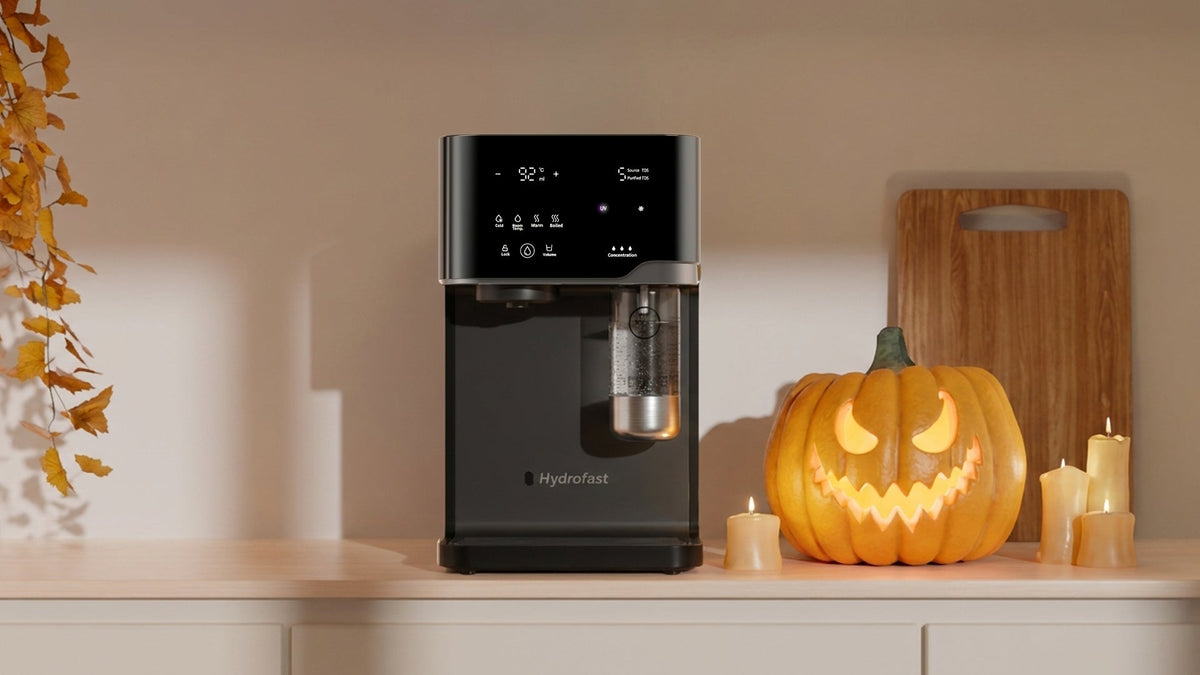
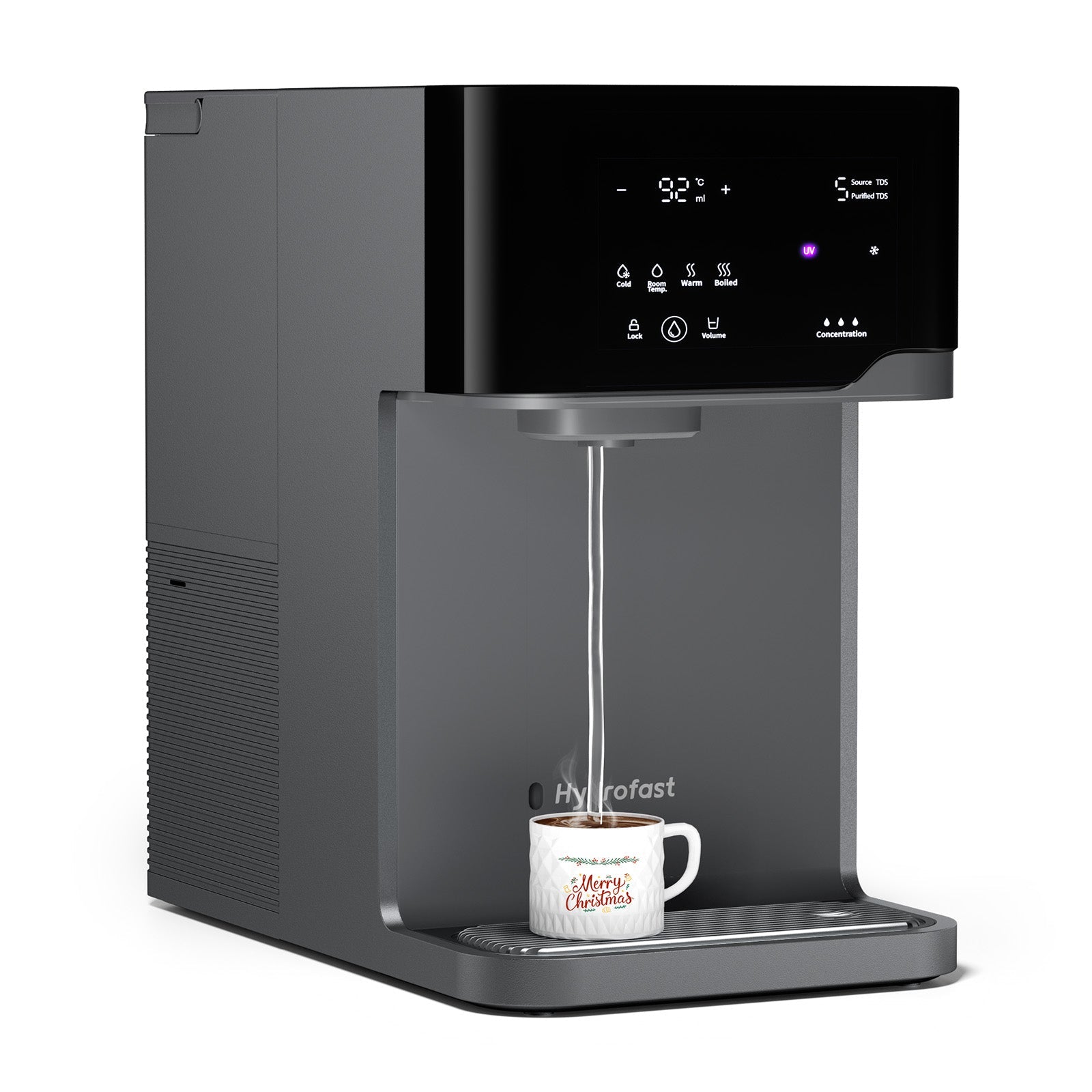
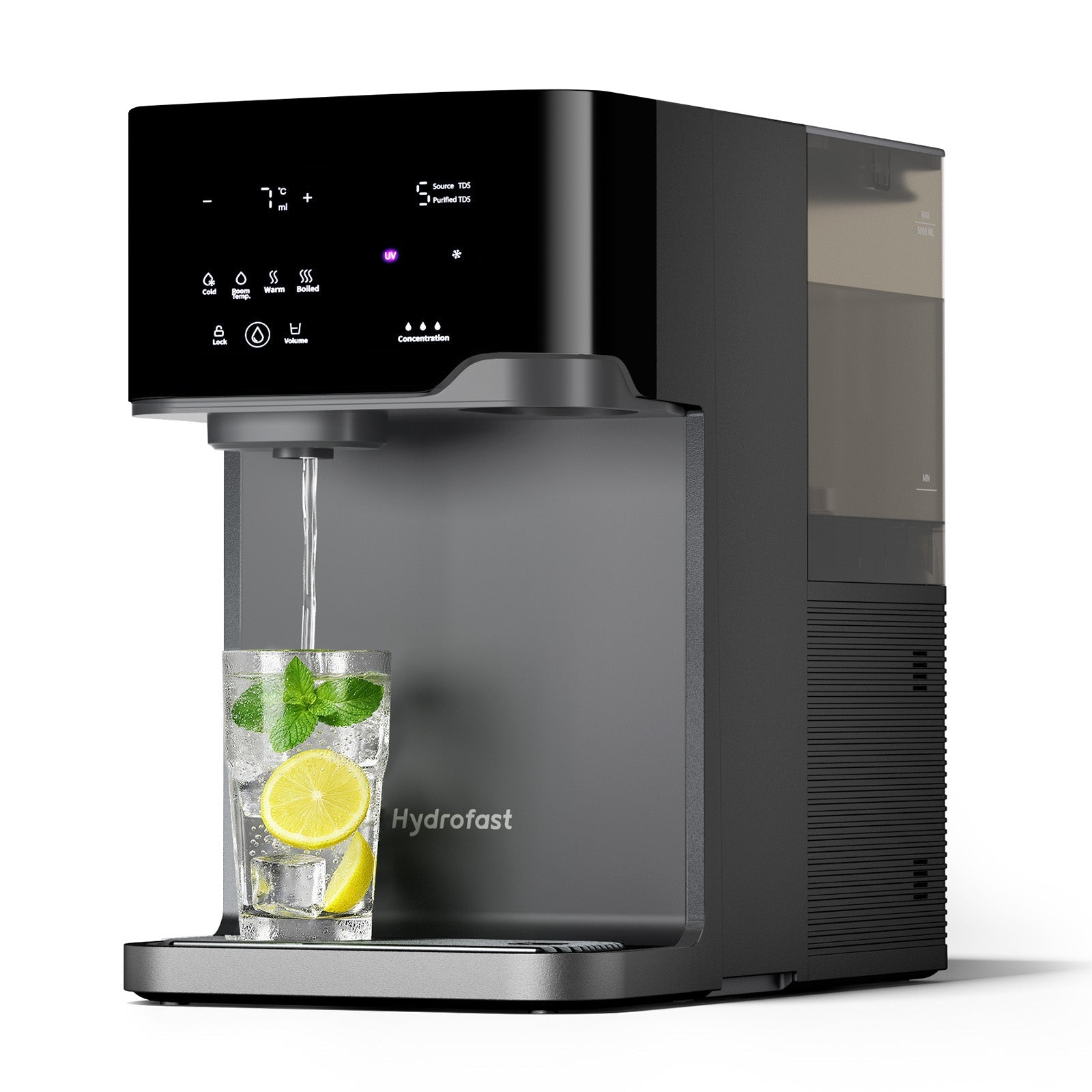
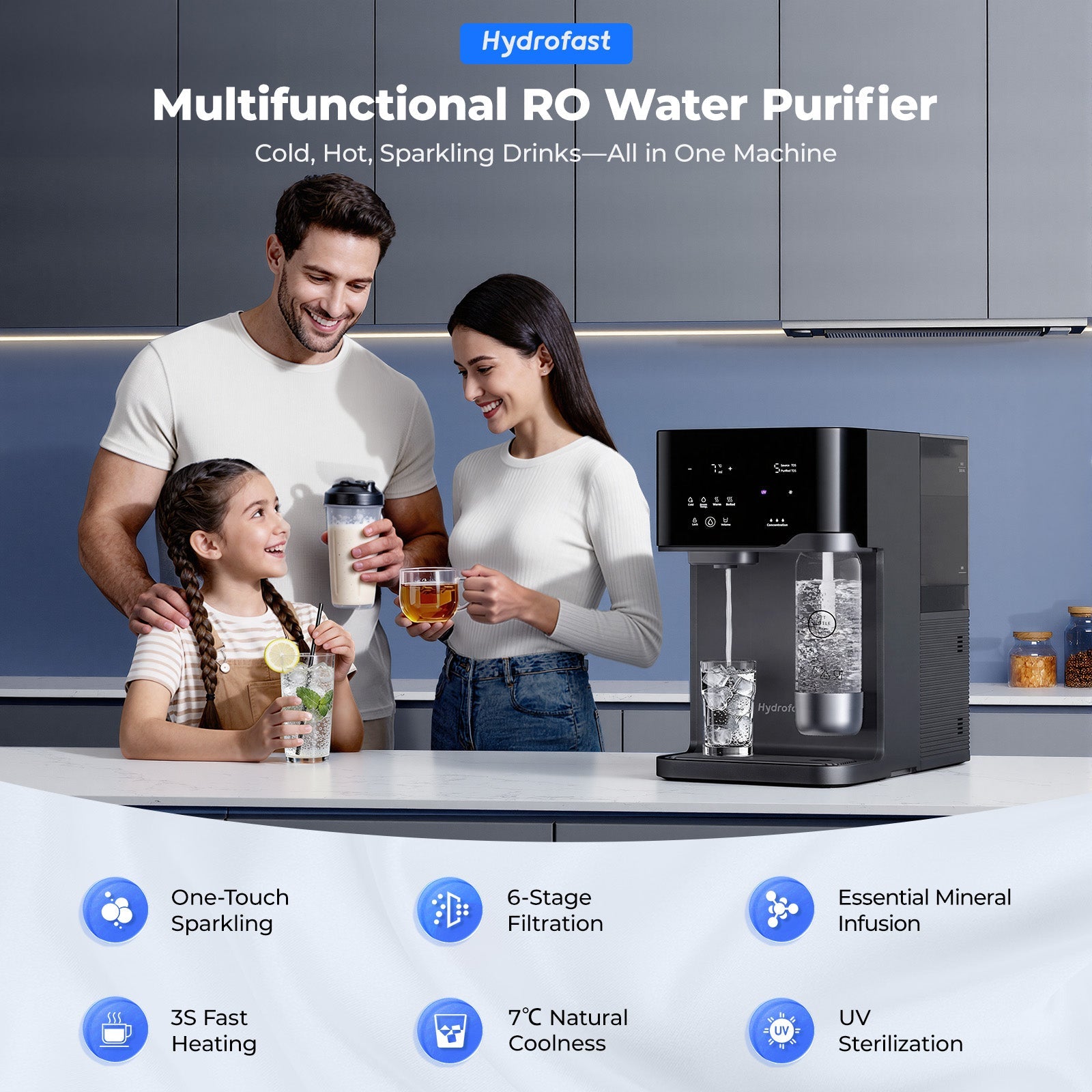
Managing drinking water is part of everyday family life, from filling a glass in the morning to preparing hot drinks and keeping everyone hydrated throughout the day. The Hydrofast C300 water purifier brings filtration and convenient water dispensing together on the countertop, helping families manage these everyday needs with less effort.
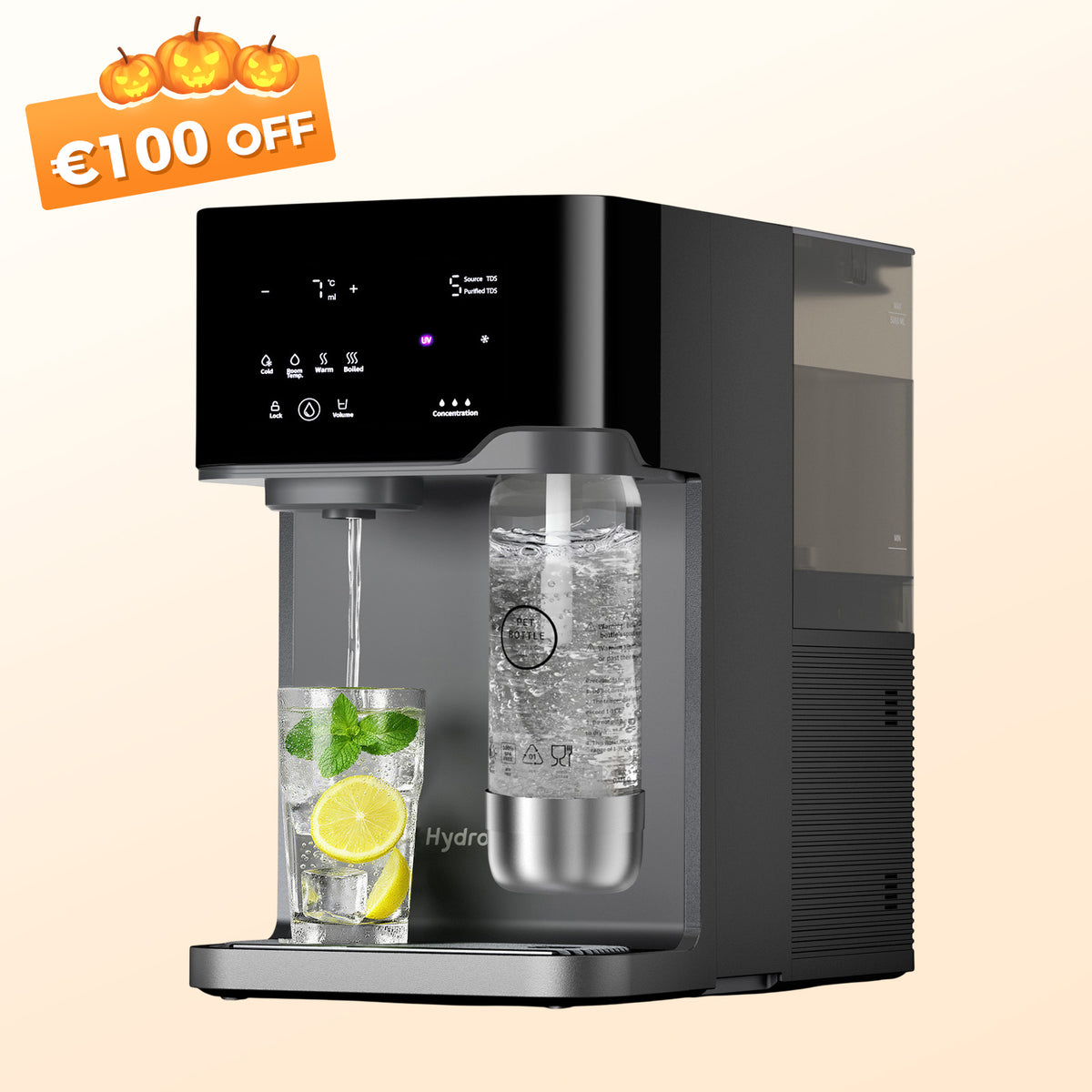
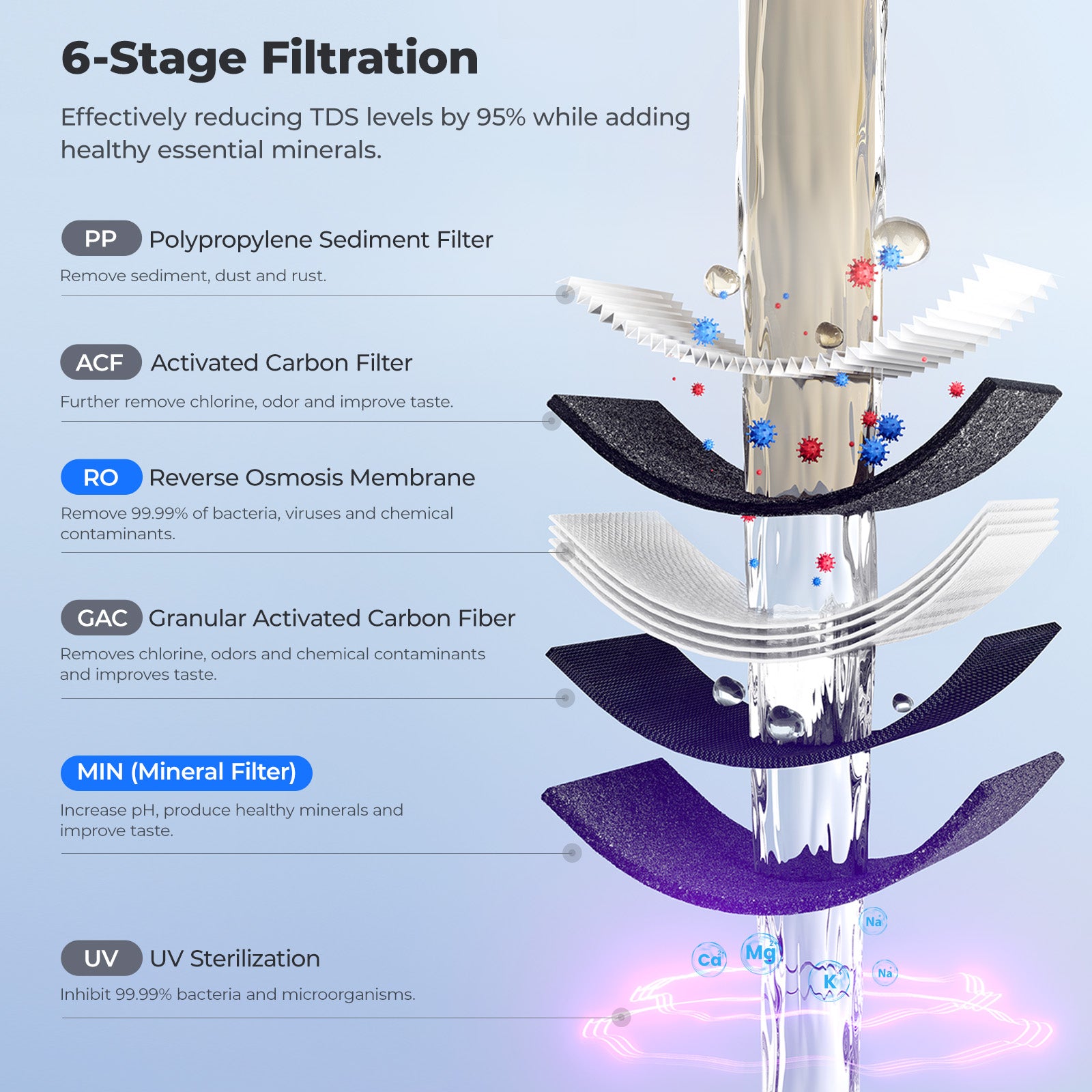
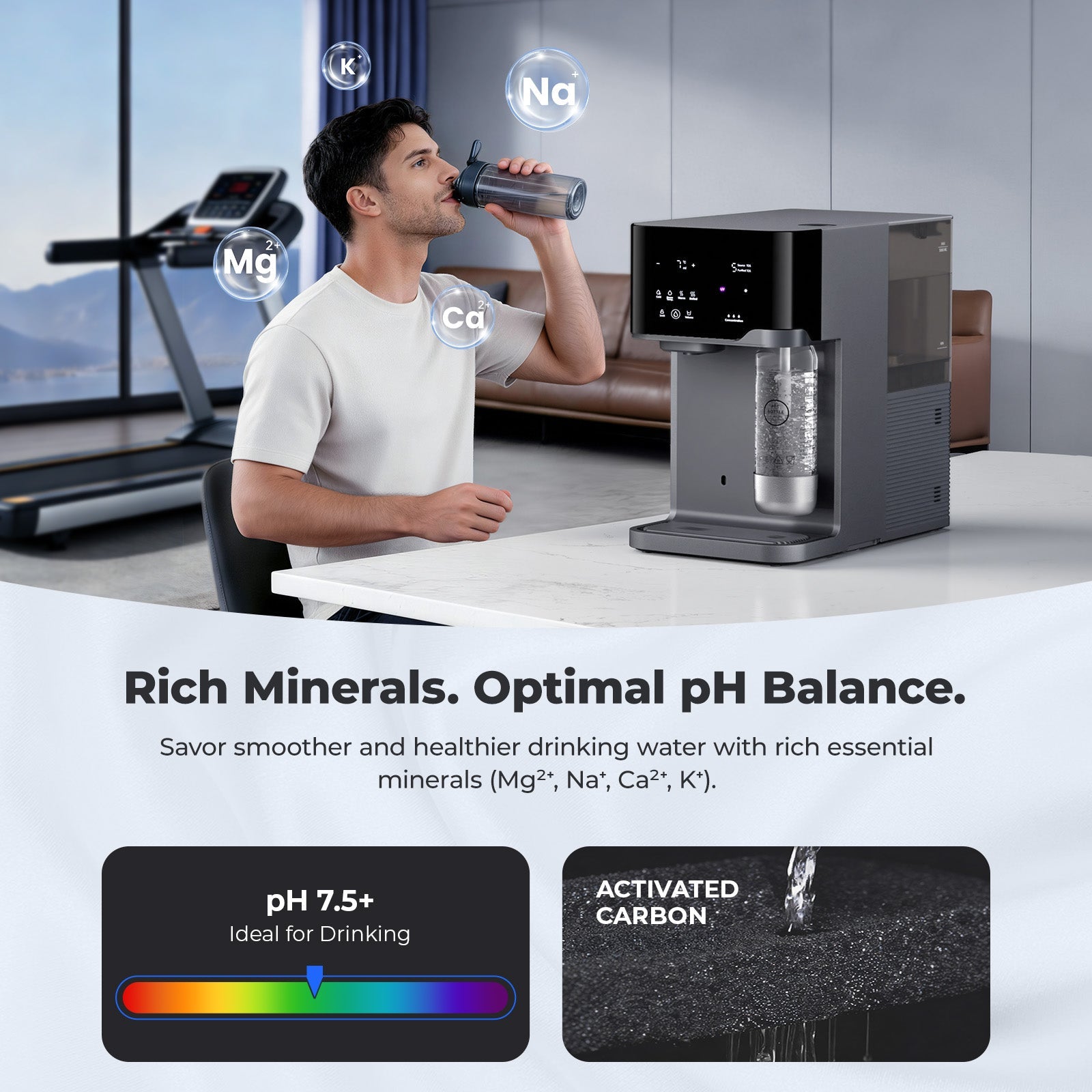
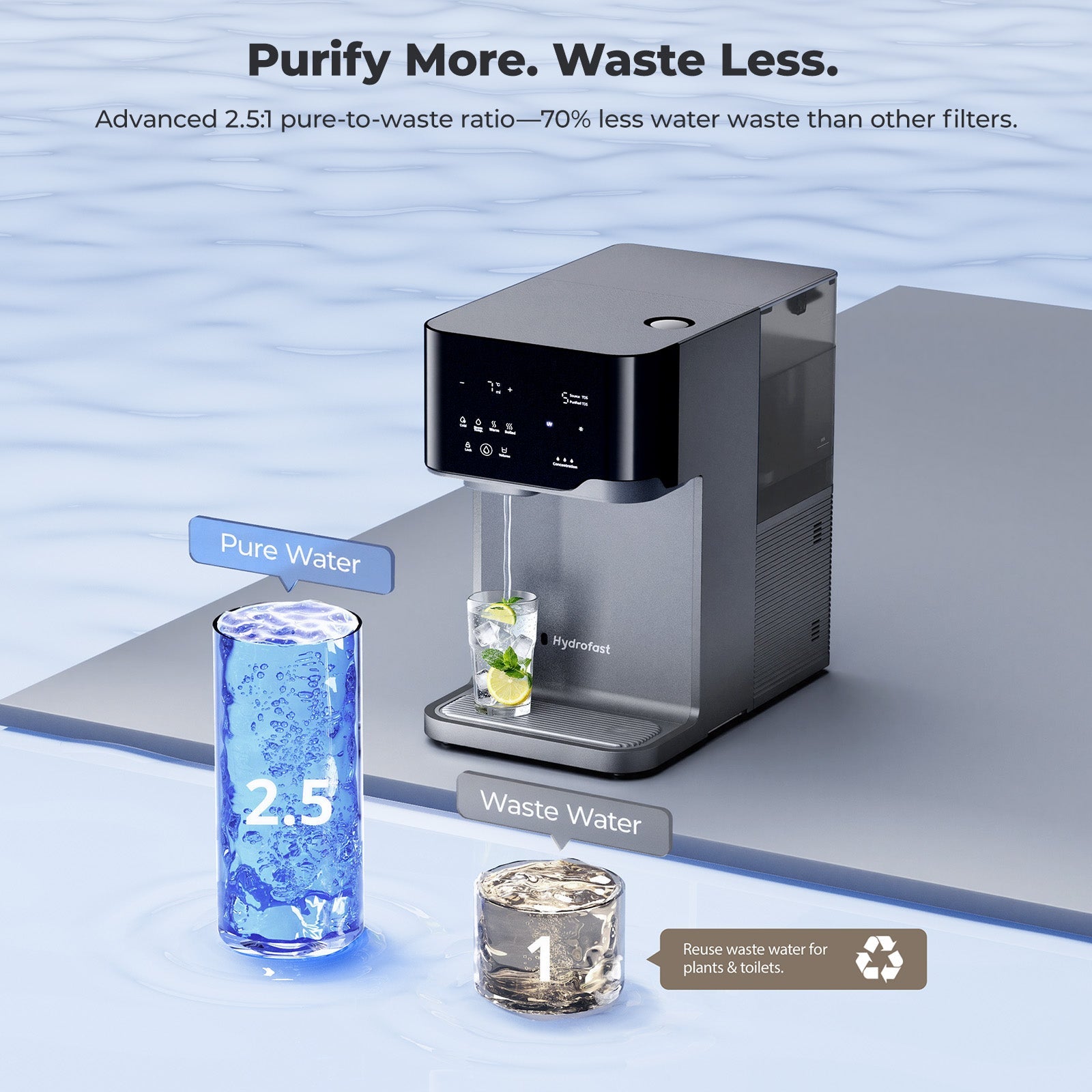
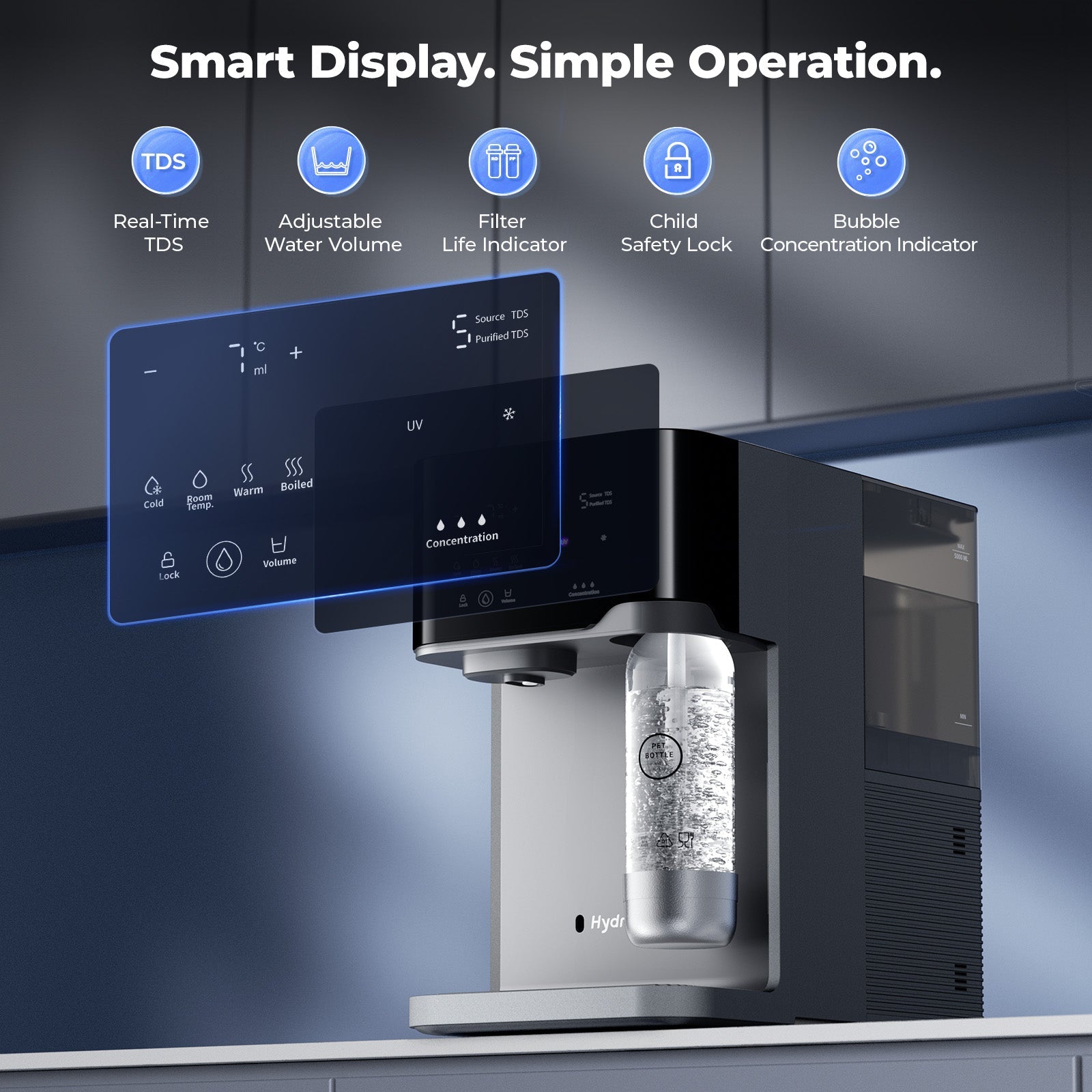
The C300 operates on municipal tap water and utilizes a six-stage treatment configuration combining PP, ACF, RO, GAC, mineral replenishment, and UV treatment. The system also features real-time source and purified water TDS (Total Dissolved Solids) readings alongside filter-replacement indicators to assist with routine maintenance.
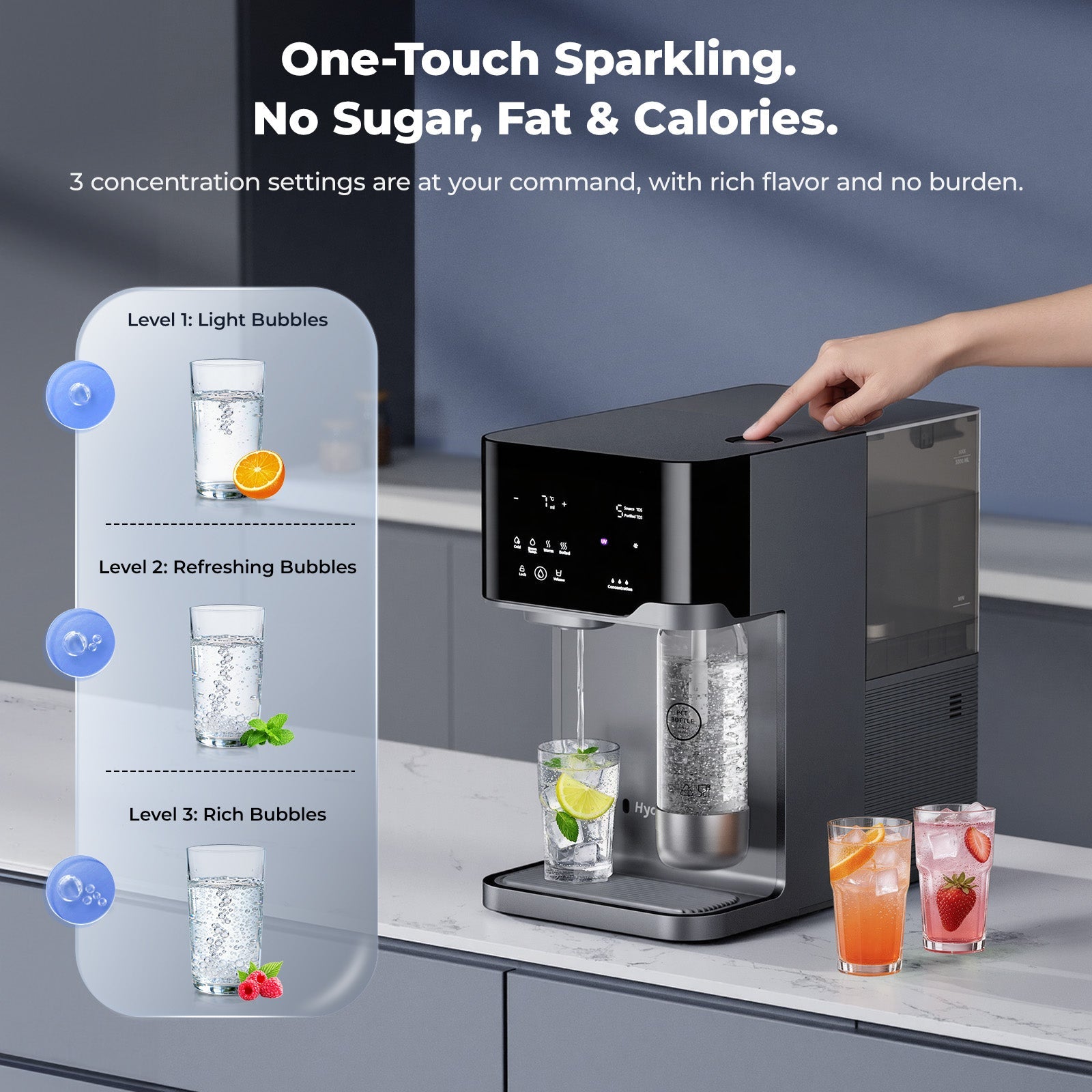
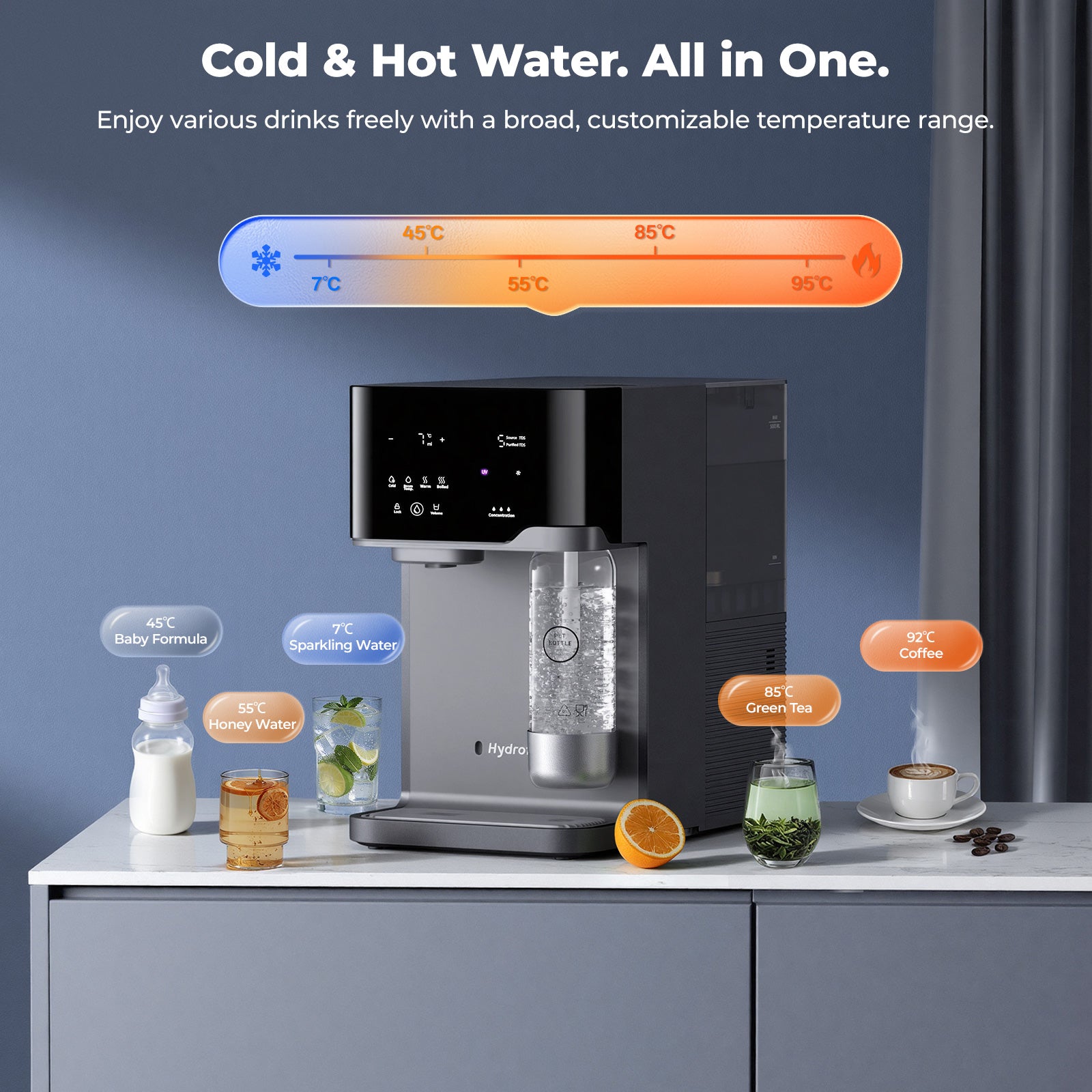
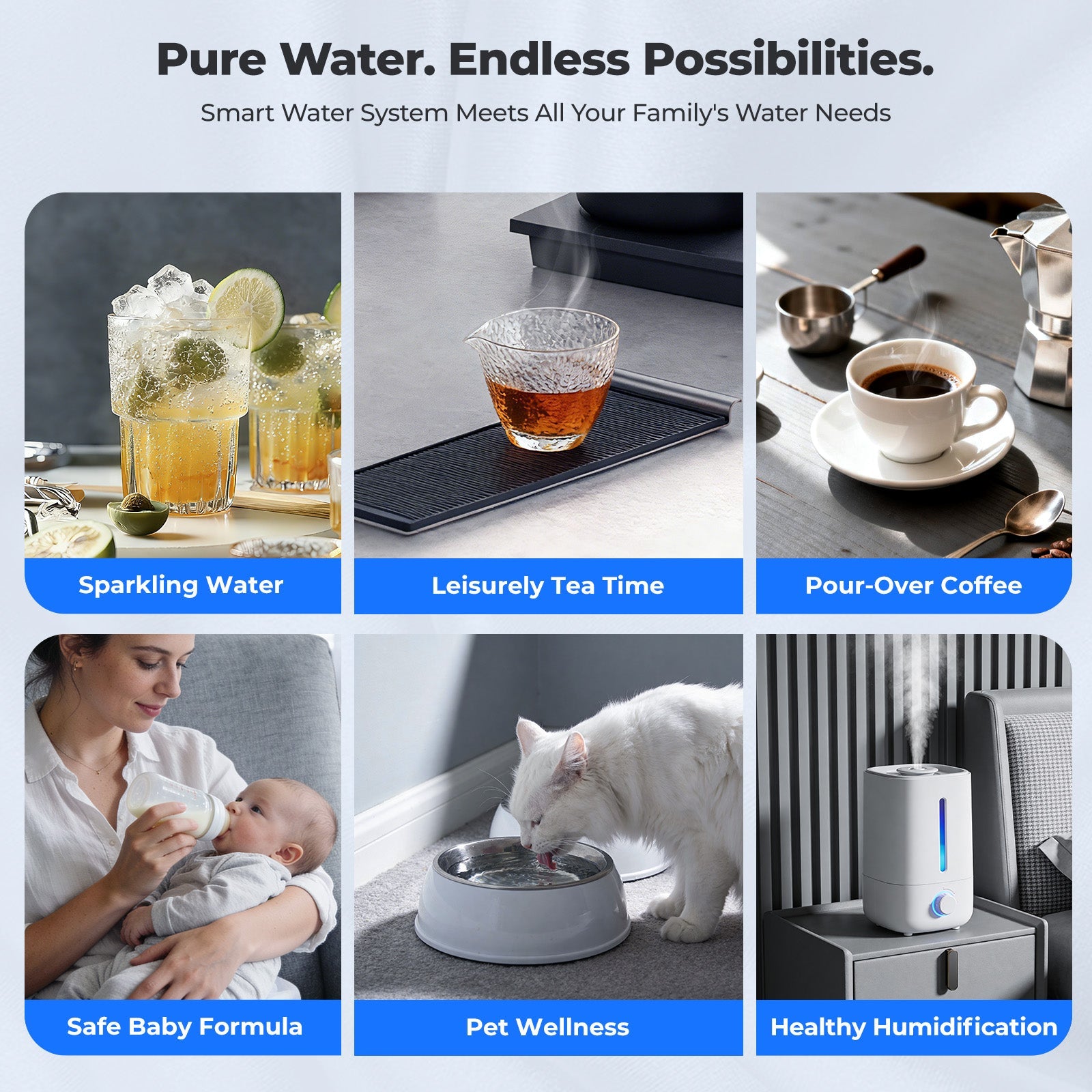
Beyond filtration, the unit offers practical everyday conveniences, including chilled-water dispensing, an adjustable heated-water range from 40°C to 95°C, preset dispensing volumes, and sparkling-water preparation. However, these features are intended for general household drinking-water needs and do not constitute an independently verified infant-formula preparation process.
For instance, the C300’s maximum temperature setting of 95°C does not replace the traditional boiling process required by certain health authorities. Furthermore, the inclusion of mineral treatment and UV features should not be interpreted as evidence that the treated water is sterile or uniquely adapted for infant feeding. Parents must never use sparkling water to prepare infant formula.
Conclusion
Safe formula preparation relies on multiple critical factors working in tandem: a compliant water source, correct mixing temperatures, hygienic equipment handling, and proper storage. While a countertop RO system like the Hydrofast C300 can effectively support everyday household drinking-water routines, it should complement—never replace—the established guidelines provided by local health authorities.




Laat een reactie achter
Alle reacties worden gemodereerd voordat ze worden gepubliceerd.
Deze site wordt beschermd door hCaptcha en het privacybeleid en de servicevoorwaarden van hCaptcha zijn van toepassing.