


Reducing plastic bottle waste does not have to start with a major lifestyle change. For many families, the first step is understanding how much bottled water they buy, why they buy it, and which purchases could realistically be replaced with a reusable alternative.
A simple family water audit can reveal these patterns and help you build a more practical routine. It can also show where a home water system, such as the Hydrofast C300, may help reduce everyday reliance on bottled drinks.
1. Track Where Your Family Uses Bottled Water
Before changing your habits, spend one or two weeks recording your family's bottled-water purchases. Include supermarket multipacks, individual bottles bought while commuting, sparkling water ordered with meals, and drinks purchased for children.
Record bottle types, sizes and weekly purchases
Track three details: the type of drink, the number of bottles purchased, and the reason for buying them.
| Purchase type | Common reason | Potential alternative |
|---|---|---|
| Still water | Everyday drinking at home | Filtered water and reusable bottles |
| Chilled water | Convenience and preference | Chilled water dispensed at home |
| Sparkling water | Regular drink preference | Home-made sparkling water |
| Bottled water on the go | Forgot to bring a bottle | Reusable bottle prepared before leaving |
This record helps distinguish purchases driven by preference from those driven by convenience. Both may be replaceable, but they require different solutions.
Identify the habits behind your purchases
A family might buy bottled water because the refrigerator is not stocked with cold water, someone prefers sparkling water, or reusable bottles are rarely ready when people leave home.
These small routines matter. Buying a reusable bottle alone will not necessarily reduce plastic consumption if family members continue purchasing bottled drinks out of habit.
Separate single-use bottles from other packaging
Focus your initial audit on single-use plastic beverage bottles. Keep cartons, glass bottles, reusable containers and other packaging separate in your records. This gives you a more consistent baseline and makes it easier to measure changes later.
2. Calculate How Many Bottles Your Family Could Avoid
Once you have a baseline, estimate how much of your current consumption could realistically be replaced. The goal is not to assume every bottle can be eliminated, but to identify a reduction target your family can maintain.
Establish your annual baseline
Multiply your average weekly bottle purchases by 52.
For example, a household purchasing 40 single-use plastic bottles per week buys approximately 2,080 bottles per year.
Estimate a realistic replacement rate
Start with the purchases that are easiest to change, such as bottled water consumed at home. Drinks bought while travelling or eating out may require a different approach.
If your family currently buys 40 bottles per week and reduces that number to 15, the estimated reduction is:
- Weekly reduction: 25 bottles
- Annual reduction: 25 × 52 = 1,300 bottles
This is a projected reduction based on the example, not a guaranteed outcome. Your actual result will depend on how consistently your family adopts the new routine.
Understand deposit costs and environmental impact
Under the EU Packaging and Packaging Waste Regulation (PPWR), measures include a target for separate collection of 90% by weight of covered single-use plastic beverage bottles and metal beverage containers up to three litres by 2029, subject to the regulation's conditions and provisions.
Deposit-return systems can encourage consumers to return eligible containers for recycling. However, deposits are generally refundable when containers are returned, so they should not automatically be counted as the cost of buying bottled water.
For example, paying a €0.15 deposit on 30 bottles each week would mean €234 in deposits paid over 52 weeks. If all eligible bottles are returned and the deposits are refunded, that amount is not a €234 saving from avoiding bottles. It is money temporarily tied up in the deposit system.
Also, bottle count is not the same as plastic weight or carbon emissions. Bottle sizes, packaging materials, transport distances, recycling systems and production methods all affect environmental impact. Avoid translating the number of bottles avoided into a precise carbon saving without reliable, comparable data.
3. Match Your Replacement Options to Your Drinking Habits
The most effective way to reduce plastic bottle waste is to choose alternatives that fit your family's actual needs.
Replace everyday still water with a refill routine
Keep reusable bottles accessible, fill them before leaving home, and establish a regular place for refilling. If your family prefers filtered water, a reverse osmosis purifier may help make home refilling more convenient.
The best option is the one your household will use consistently. Consider available space, maintenance requirements, filter costs and the quality of your local tap water before choosing a system.
Plan for chilled and sparkling water
If your family frequently buys chilled water, having cold water readily available can make home refilling more appealing. For regular sparkling-water drinkers, a compatible home carbonation system may reduce the need to purchase individual bottles.
These alternatives work best when they replace purchases you already make. They do not automatically reduce waste if they simply add another product to your existing routine.
Where the Hydrofast C300 Water Purifier Fits
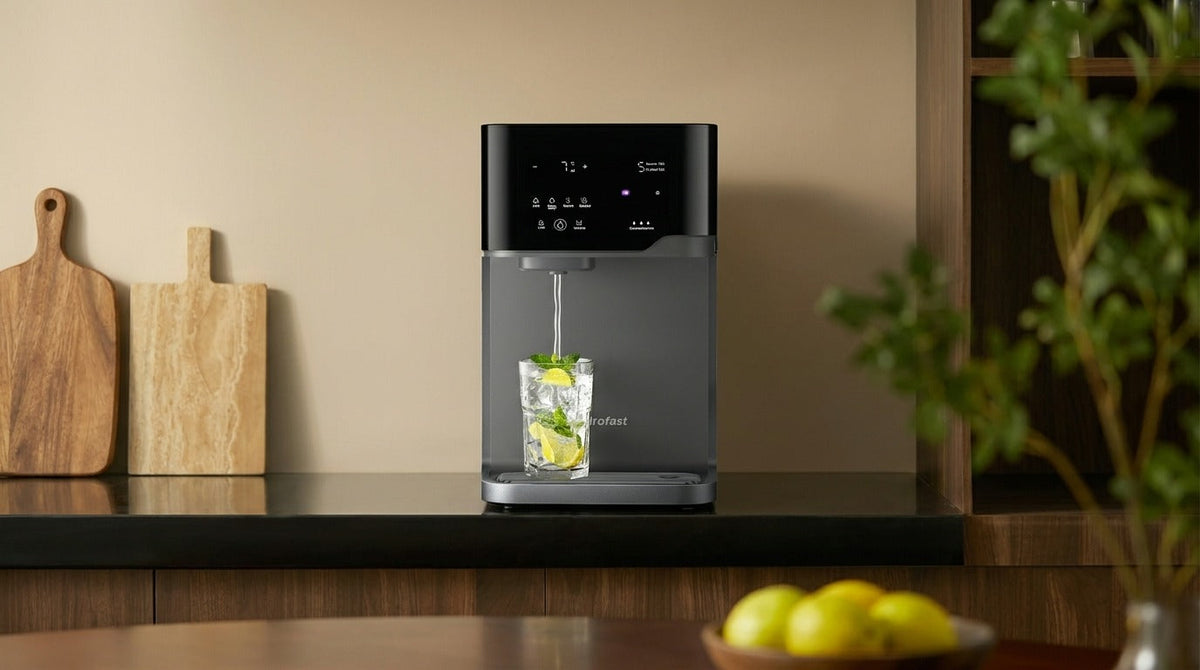
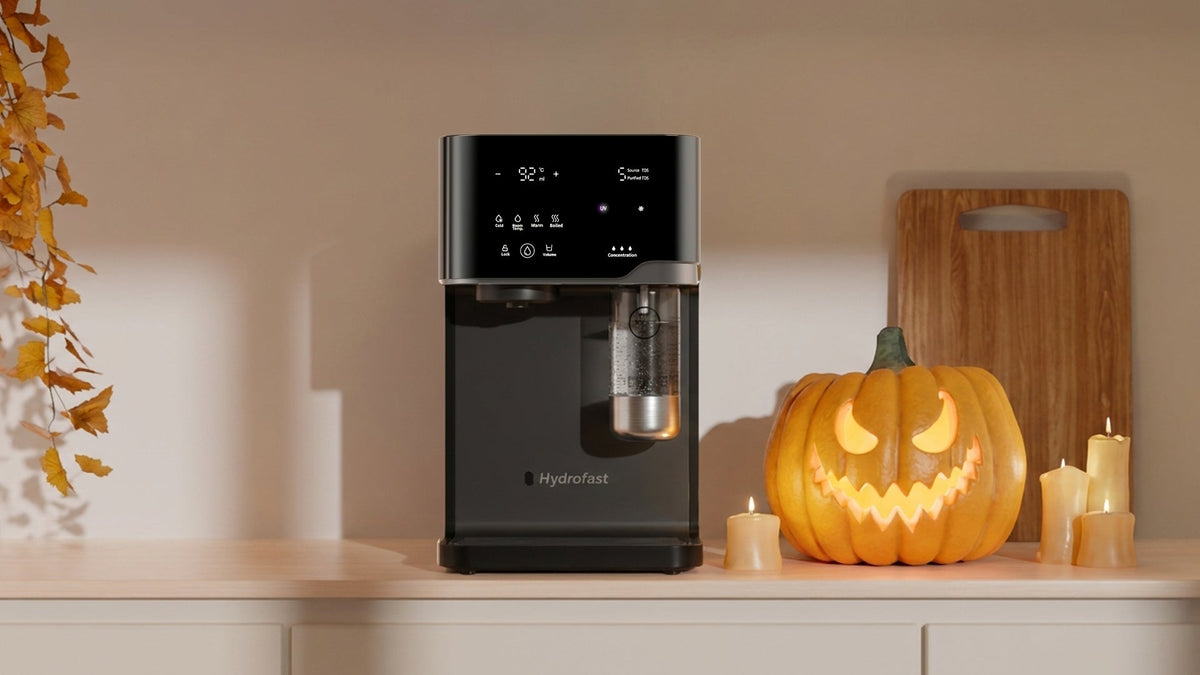
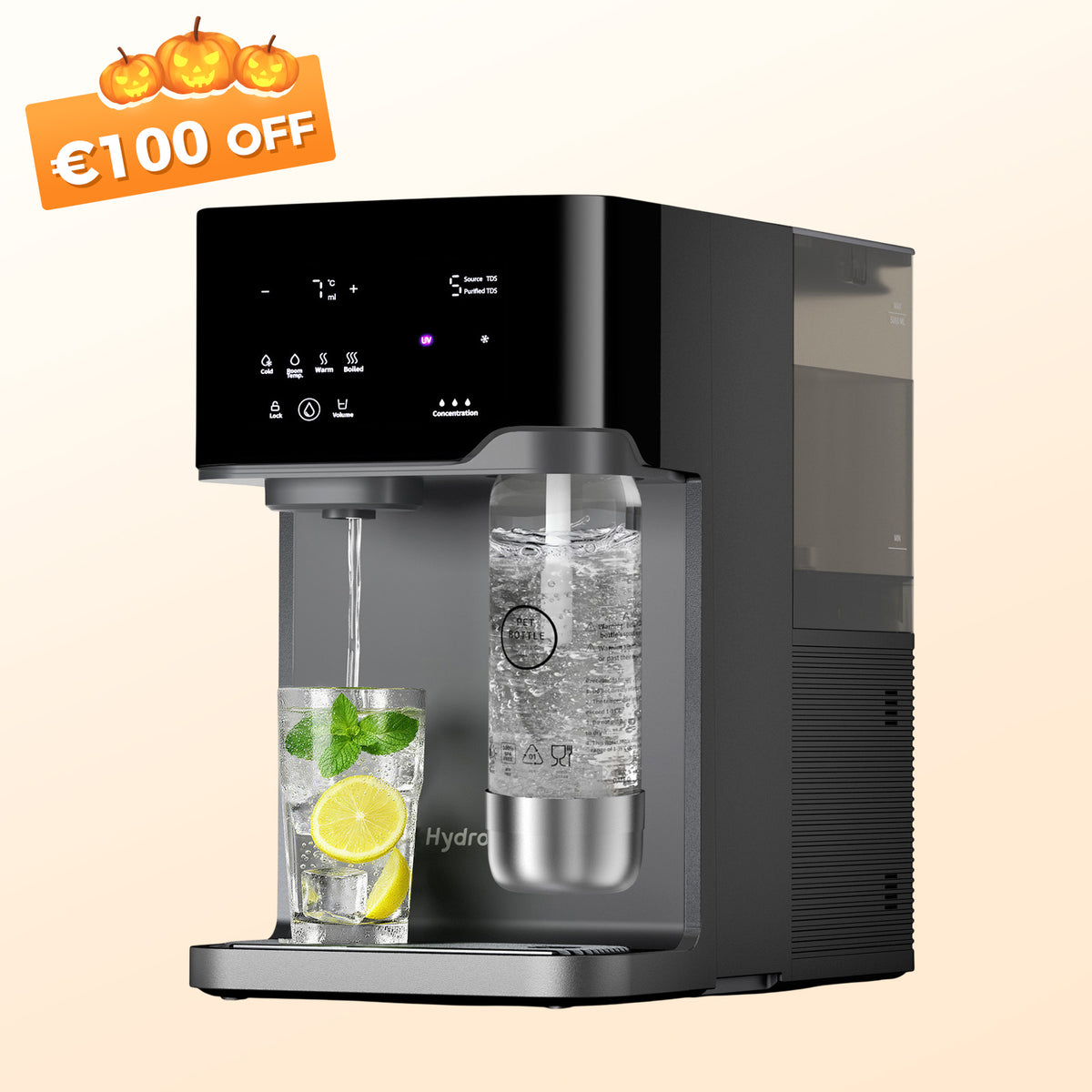
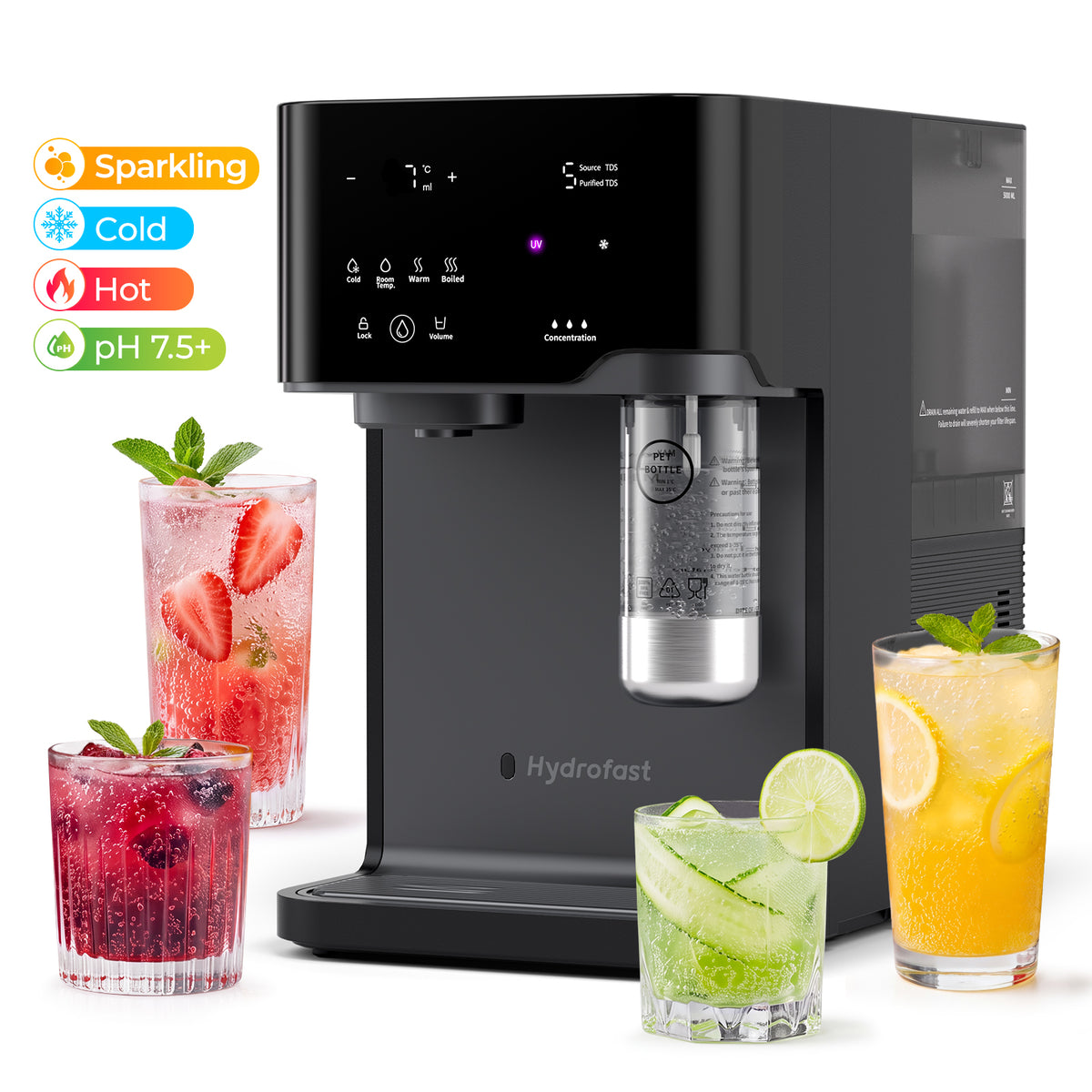
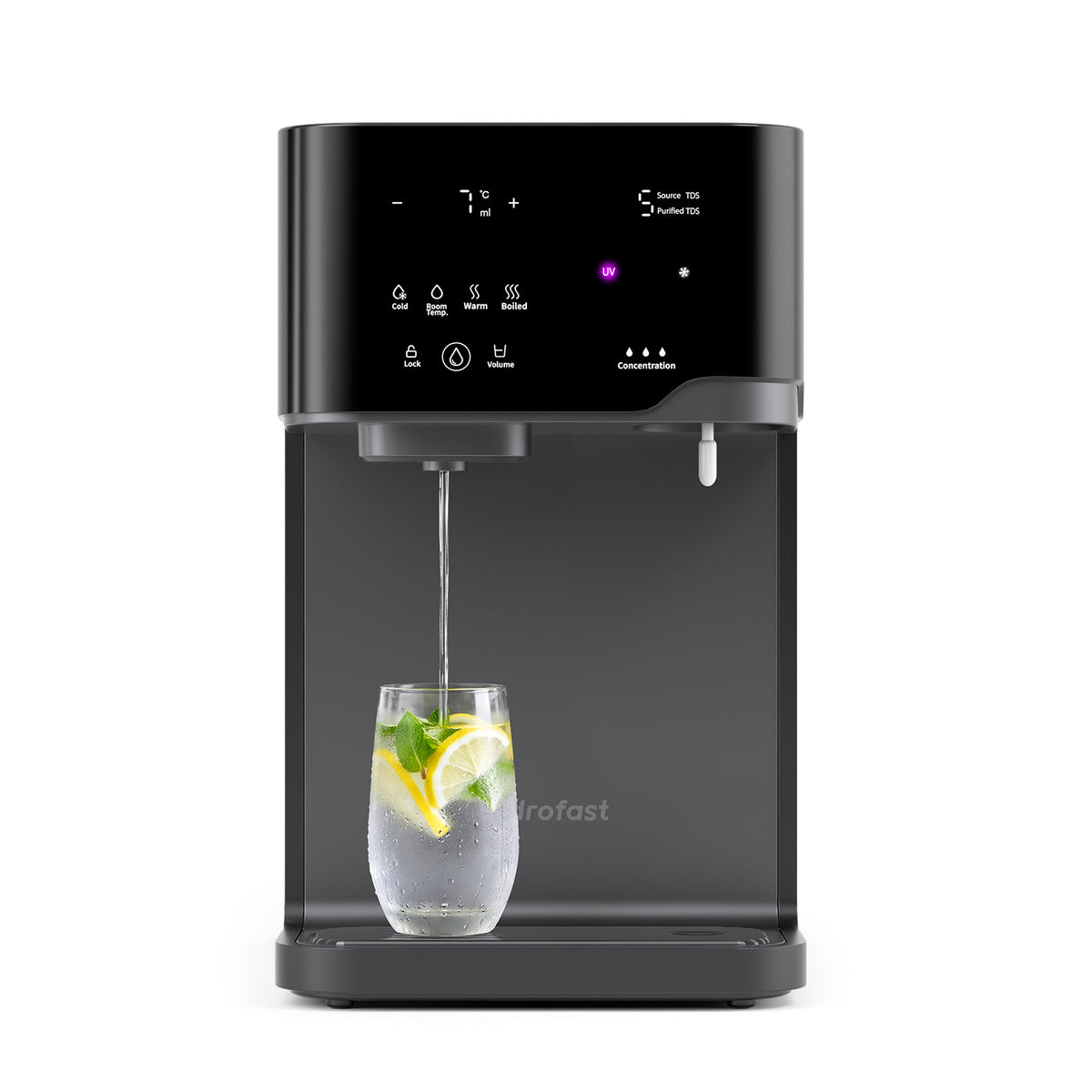
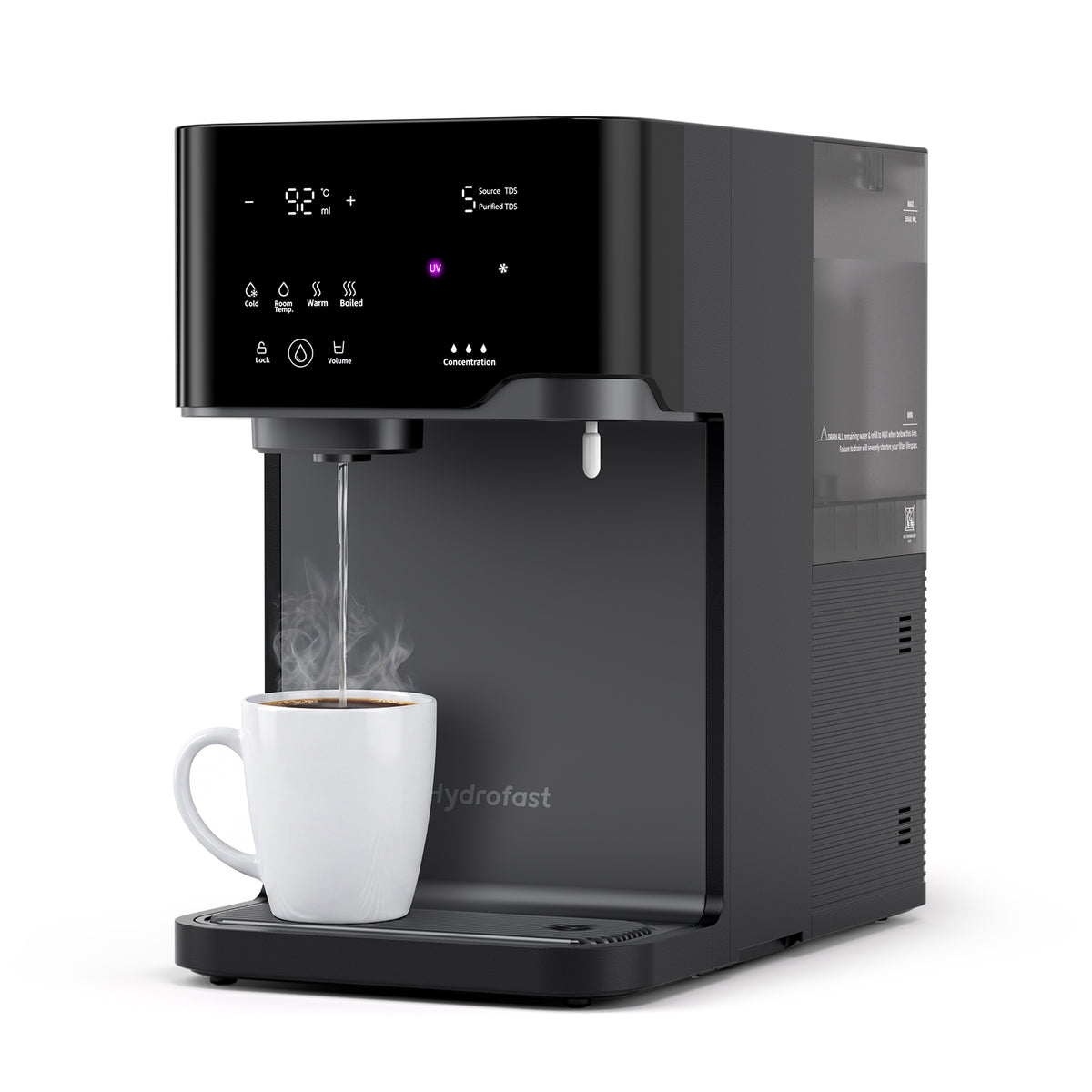
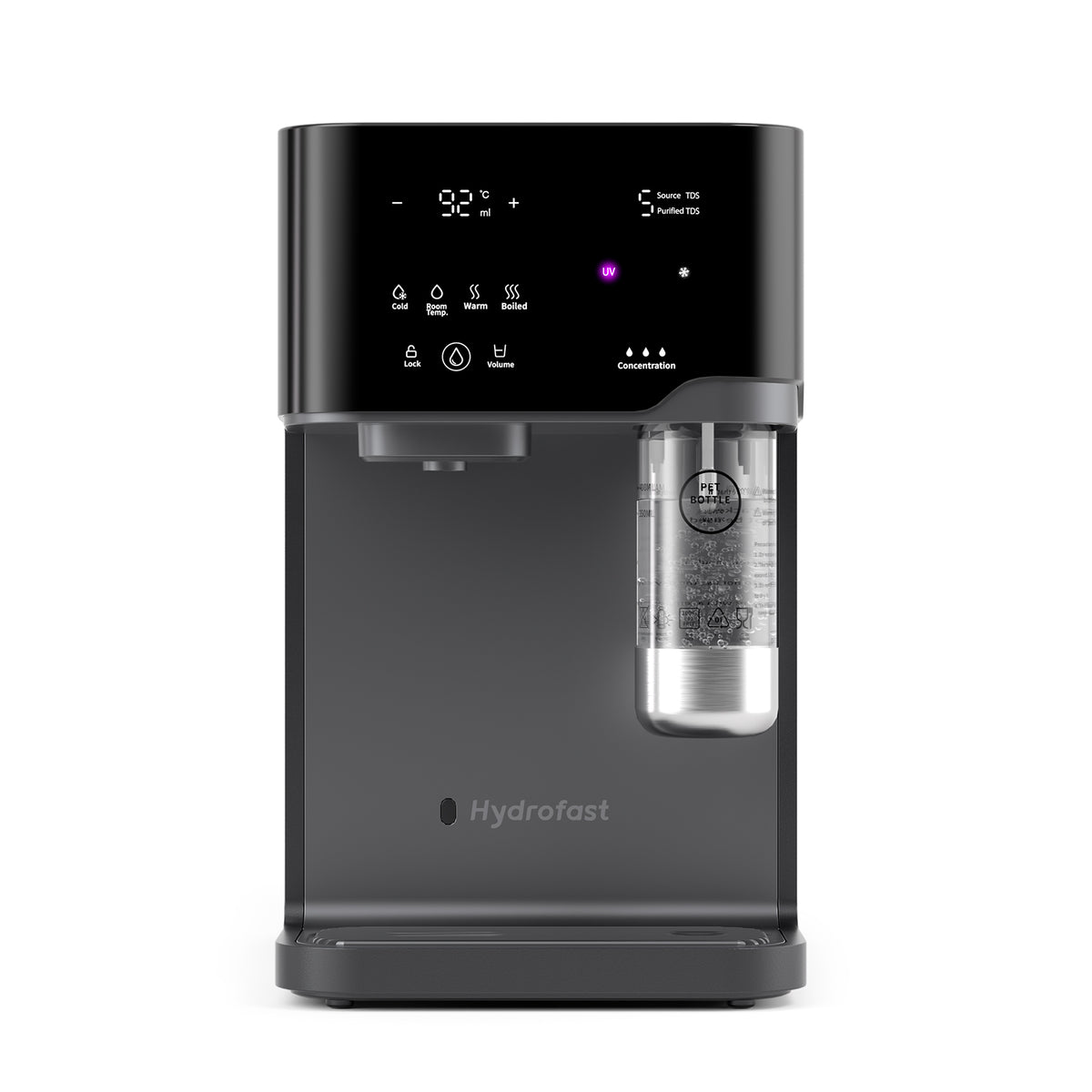
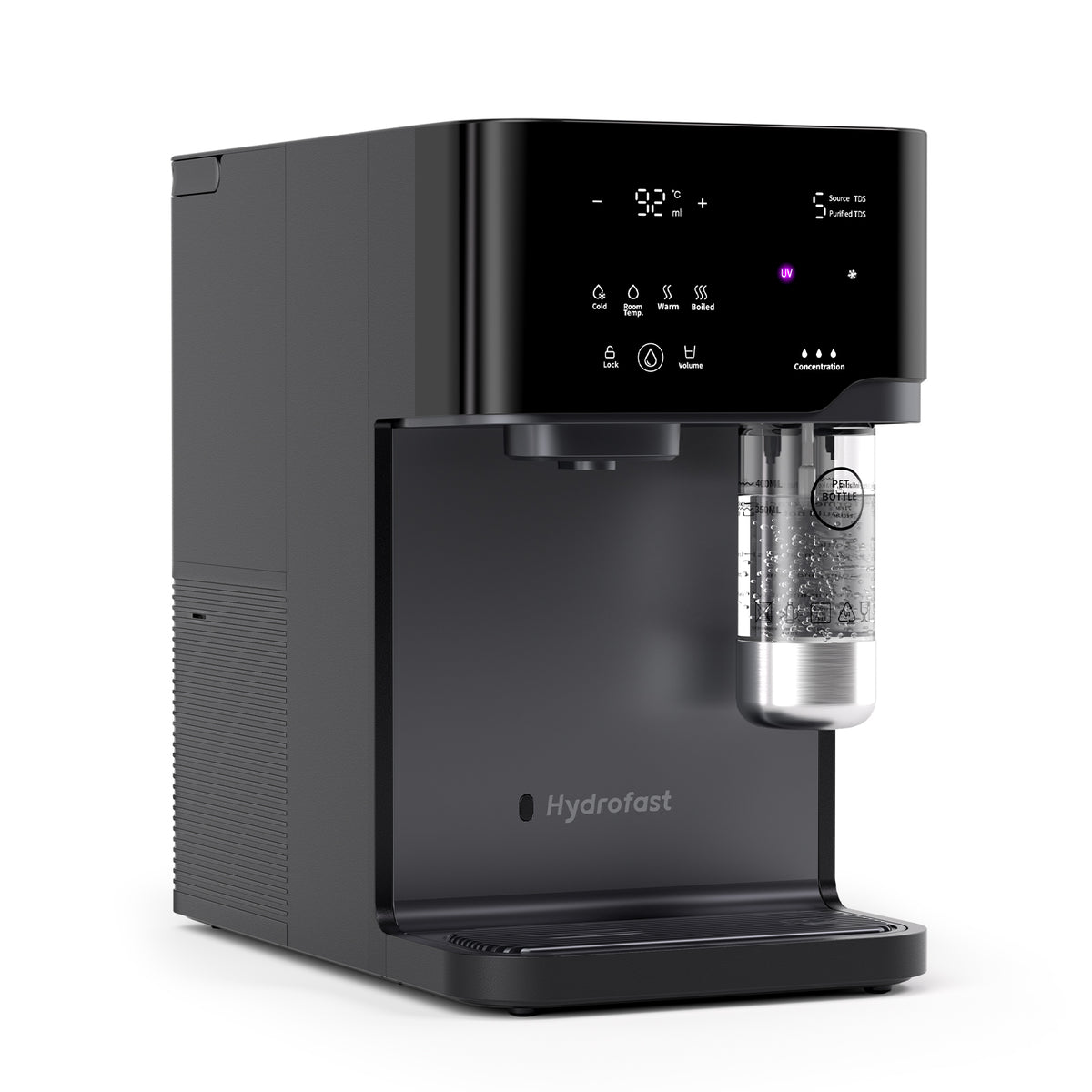
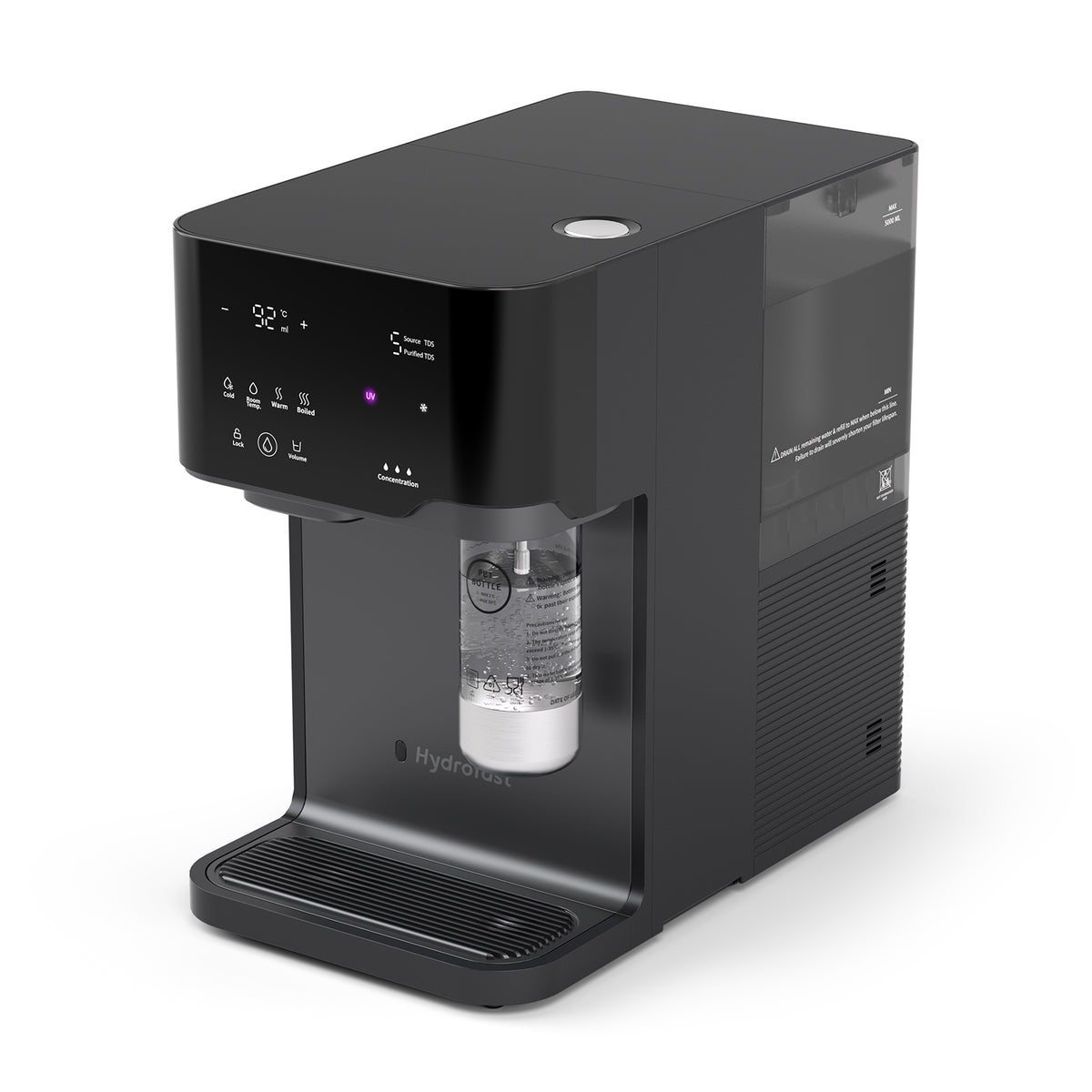
The Hydrofast C300 water purifier helps families reduce reliance on bottled drinks by bringing several everyday water needs into one countertop system. Its six-stage filtration combines reverse osmosis (RO), mineral replenishment and UV treatment. The 0.0001 μm RO membrane helps reduce unwanted substances, while the system removes up to 95% of TDS and displays real-time TDS readings for source and purified water.
Beyond filtration, the C300 dispenses chilled water at approximately 7–15°C and adjustable-temperature water from 40°C to 95°C. Its preset and adjustable volumes make refilling reusable bottles and preparing drinks convenient. It also makes sparkling water at home with a compatible CO₂ cylinder, sold separately—helping households cut back on single-use bottles of sparkling water.
Hydrofast states that one filter cartridge produces 2,000 litres of purified water, equivalent to 4,000 plastic bottles. This is a manufacturer-provided equivalence, not a guaranteed household result. Actual reductions depend on how much bottled water your family replaces. Remember to account for filter replacements, electricity, filtration wastewater and CO₂ supplies when assessing the overall environmental impact.
For households that regularly buy still, chilled or sparkling water, the C300 offers a practical way to make refilling part of everyday life. It cannot replace every bottle used outside the home, but it can help reduce several recurring sources of plastic bottle waste.
4. Turn Your Audit Into a Practical Family Routine
A successful plan should be easy enough to follow on busy weekdays, not just when everyone has extra time.
Review your audit and identify the two categories responsible for the most purchases that could reasonably be replaced. For one family, that might be still water bought for home consumption. For another, it might be chilled water and sparkling water.
Focus on these categories first instead of attempting to change every habit at once.
Keep reusable bottles in a convenient location and prepare them as part of your morning routine. If your family prefers cold water, maintain a ready supply. If sparkling water is a regular choice, make sure the equipment and compatible CO₂ supply are available when needed.
The objective is to remove the inconvenience that often leads to another bottled-water purchase.
Repeat the original audit after two weeks of following your new routine. Compare weekly bottle purchases with the baseline, then calculate your projected annual reduction.
If the numbers have not changed much, look at the reasons. Perhaps bottles are not being prepared before leaving, or family members still prefer packaged sparkling water. Adjust the routine before setting a more ambitious target.
5. Keep the Environmental Claims in Perspective
Reducing single-use plastic bottles is a useful goal, but a credible plan should consider the whole system rather than focusing on one material alone.
Reuse bottles consistently and keep them clean
Reusable bottles need regular cleaning and proper drying. Choose bottles that suit your family's routines and are easy to maintain. Keep a spare bottle available if forgetting or losing one often leads to buying bottled water.
Account for water-system operating needs
A household water system has its own resource requirements. Filter cartridges need replacing, electricity may be needed for chilled or heated water, and reverse osmosis filtration produces wastewater. Sparkling-water systems also require a compatible CO₂ supply.
A sustainable water purifier should therefore be assessed by how it fits into actual household use, not by filtration performance alone. Consider how much bottled water it replaces, the lifespan and disposal of consumables, maintenance costs and your local water conditions.
Measure what changes, not what you hope will change
Keep your original purchase records and compare them with your results after adopting the new routine. Report the number of bottles avoided as an estimate based on observed changes. Do not claim zero waste or a specific carbon reduction without supporting calculations.
The most useful measure is whether your family is buying fewer single-use bottles over time while maintaining a routine it can realistically sustain.
Make Your Family Water Audit Count
Reducing plastic bottle waste starts with understanding where those bottles come from. Track your purchases, identify the habits you can change, and set a realistic reduction target. Reusable bottles and a convenient refill routine can make the biggest difference when they fit naturally into everyday life.
For households that regularly purchase still, chilled and sparkling water, the Hydrofast C300 offers one integrated way to make more drinks at home. Combined with consistent refilling and a realistic view of operating requirements, it can help families reduce avoidable bottle purchases and build a more sustainable drinking-water routine.


Laat een reactie achter
Alle reacties worden gemodereerd voordat ze worden gepubliceerd.
Deze site wordt beschermd door hCaptcha en het privacybeleid en de servicevoorwaarden van hCaptcha zijn van toepassing.