


Introduction: Is Bottled Water Really Free From Plastic?
Bottled water is often seen as a simple and convenient alternative to tap water. But research has shown that bottled water can also contain plastic particles. These include microplastics and much smaller nanoplastics.
This does not mean that bottled water is automatically unsafe. Scientists are still studying how much exposure matters. They are also continuing to research the possible long-term health effects of different types of plastic particles.
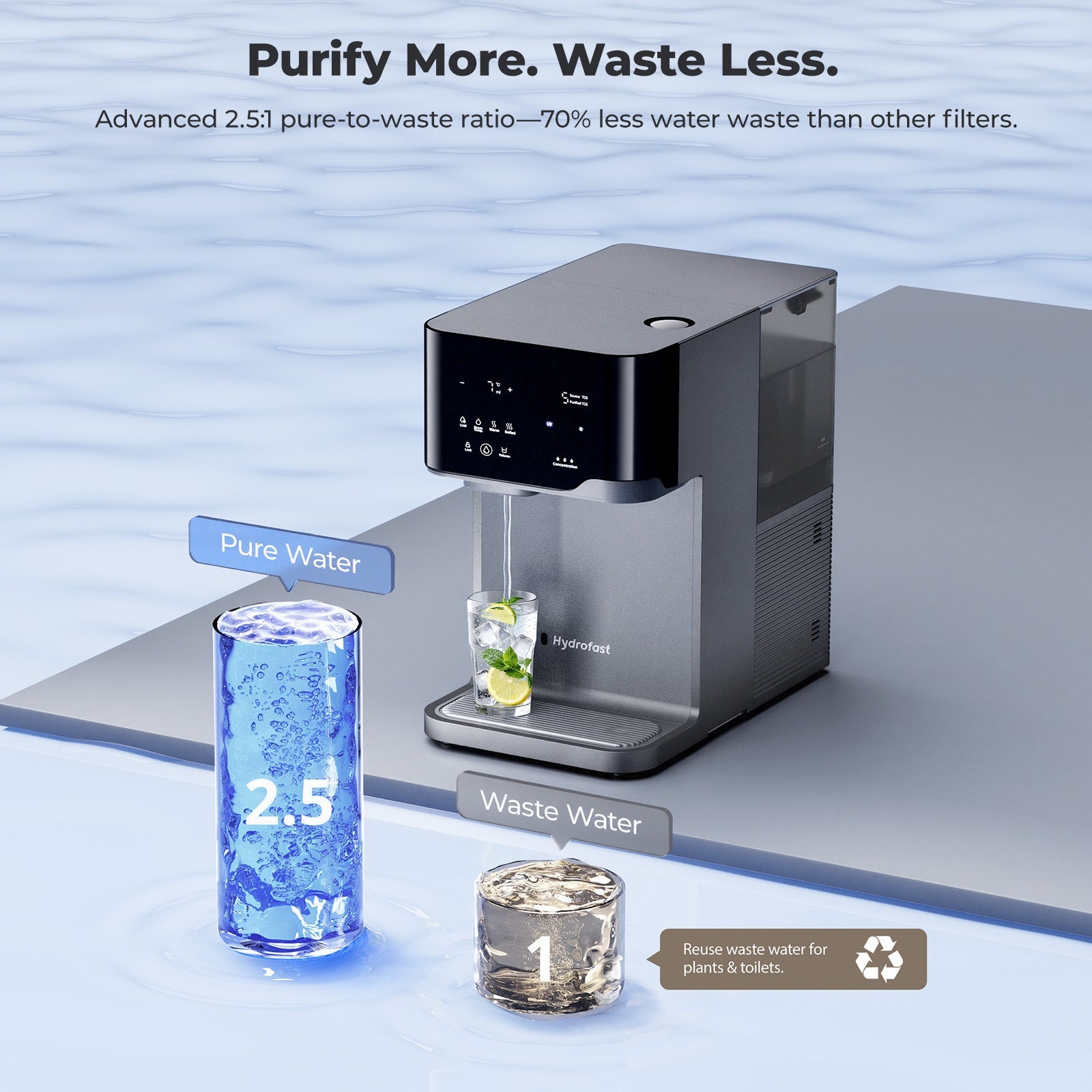
A home reverse osmosis (RO) water filter can be one option. RO uses a membrane-based filtration process. It can reduce many substances in water and provide filtered water directly at home.
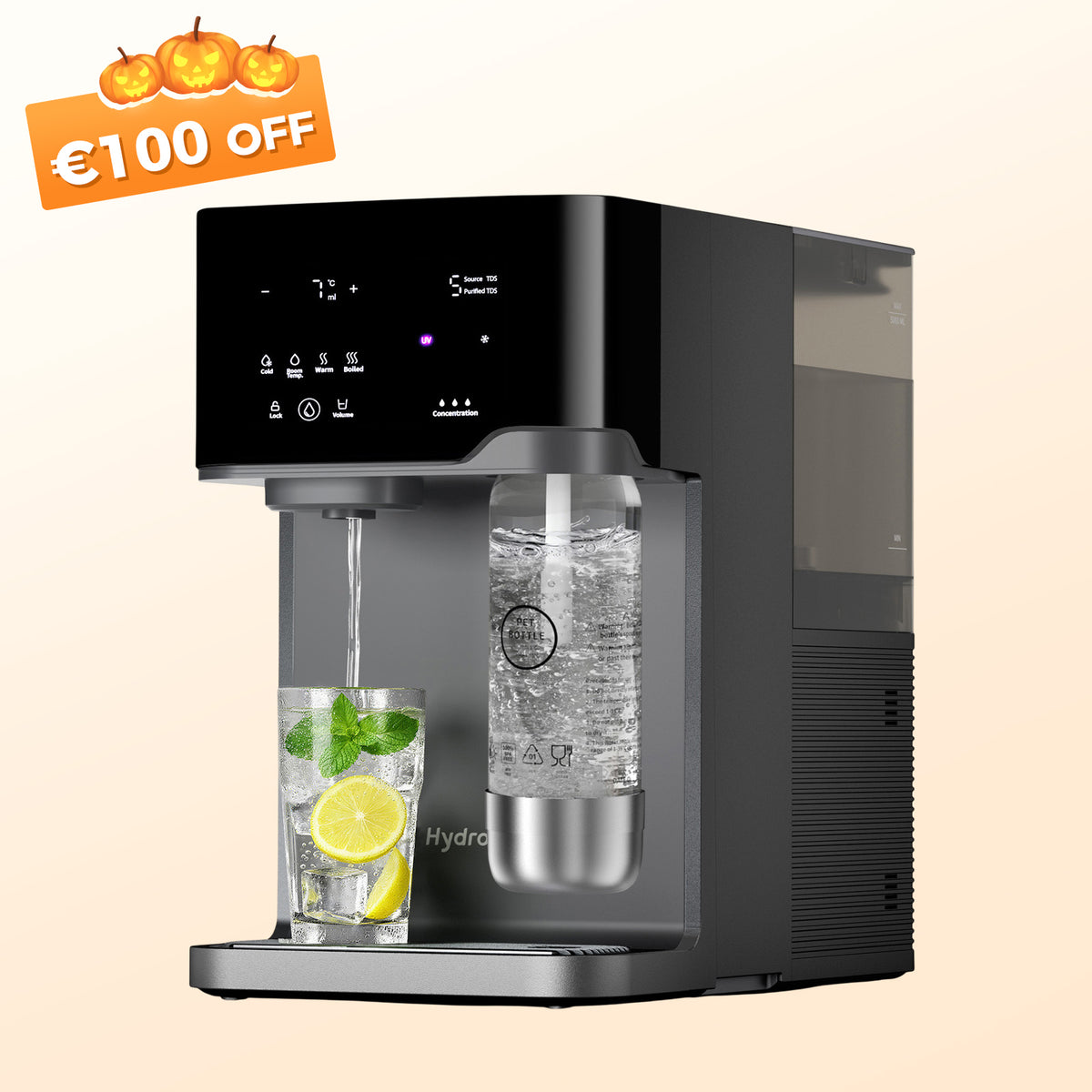
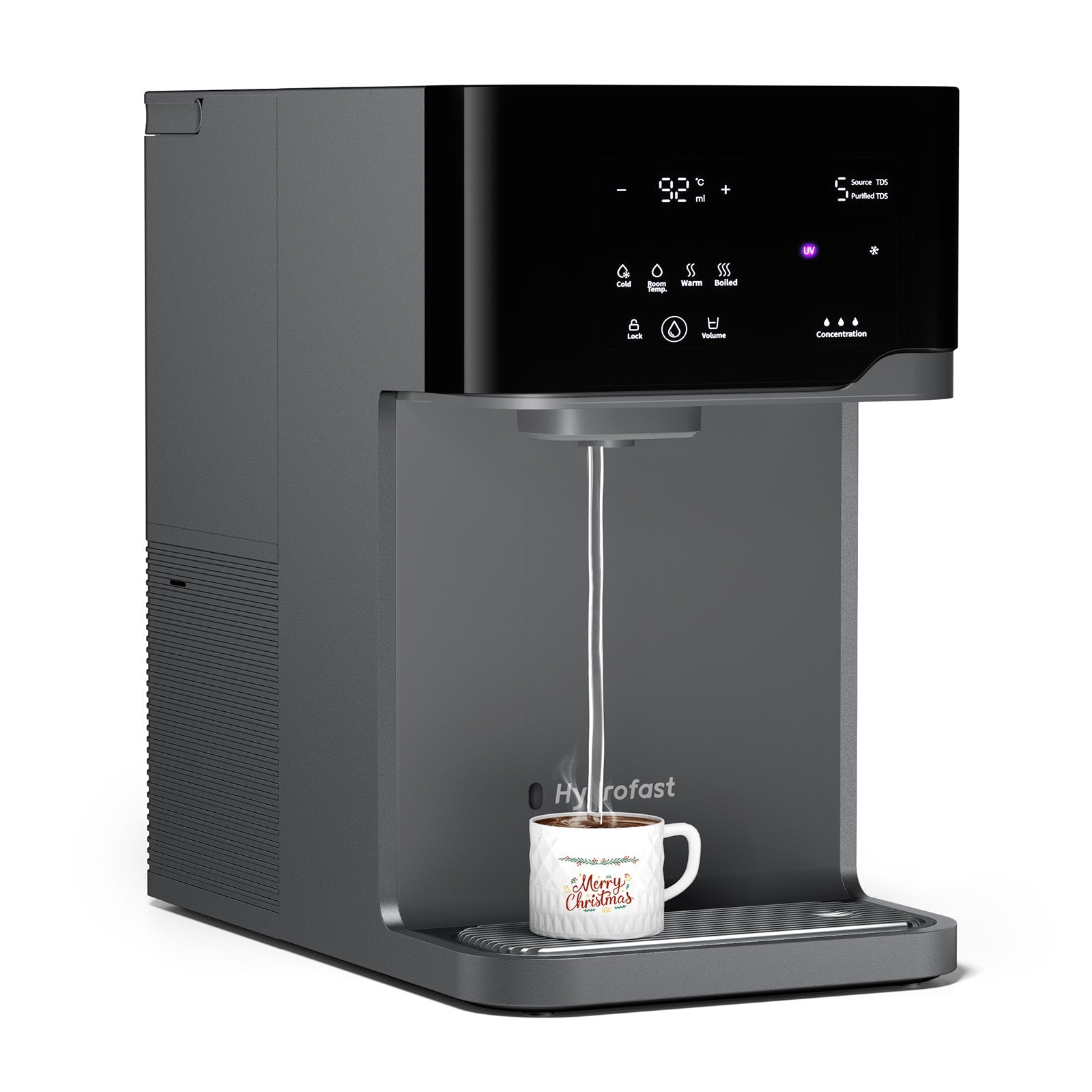
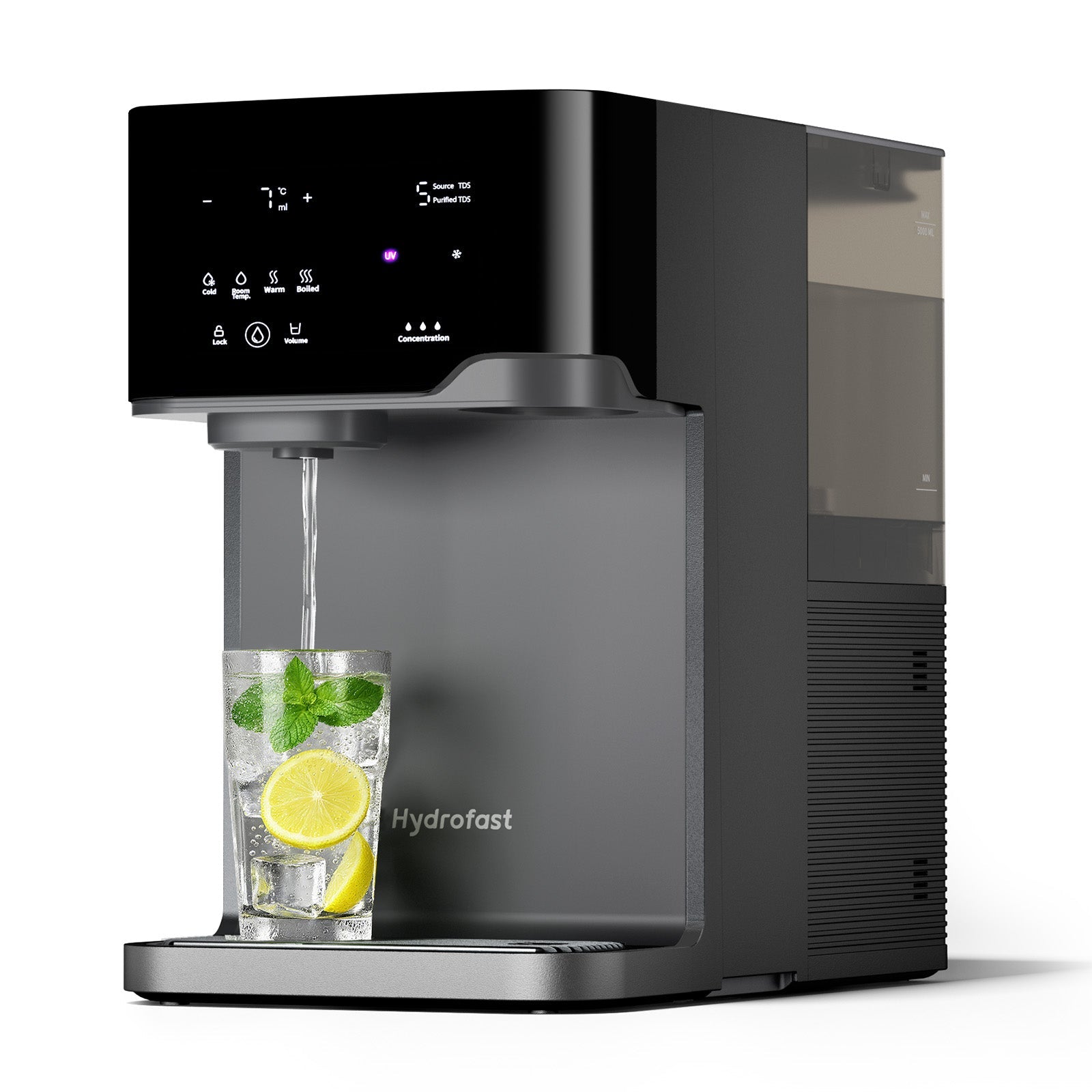
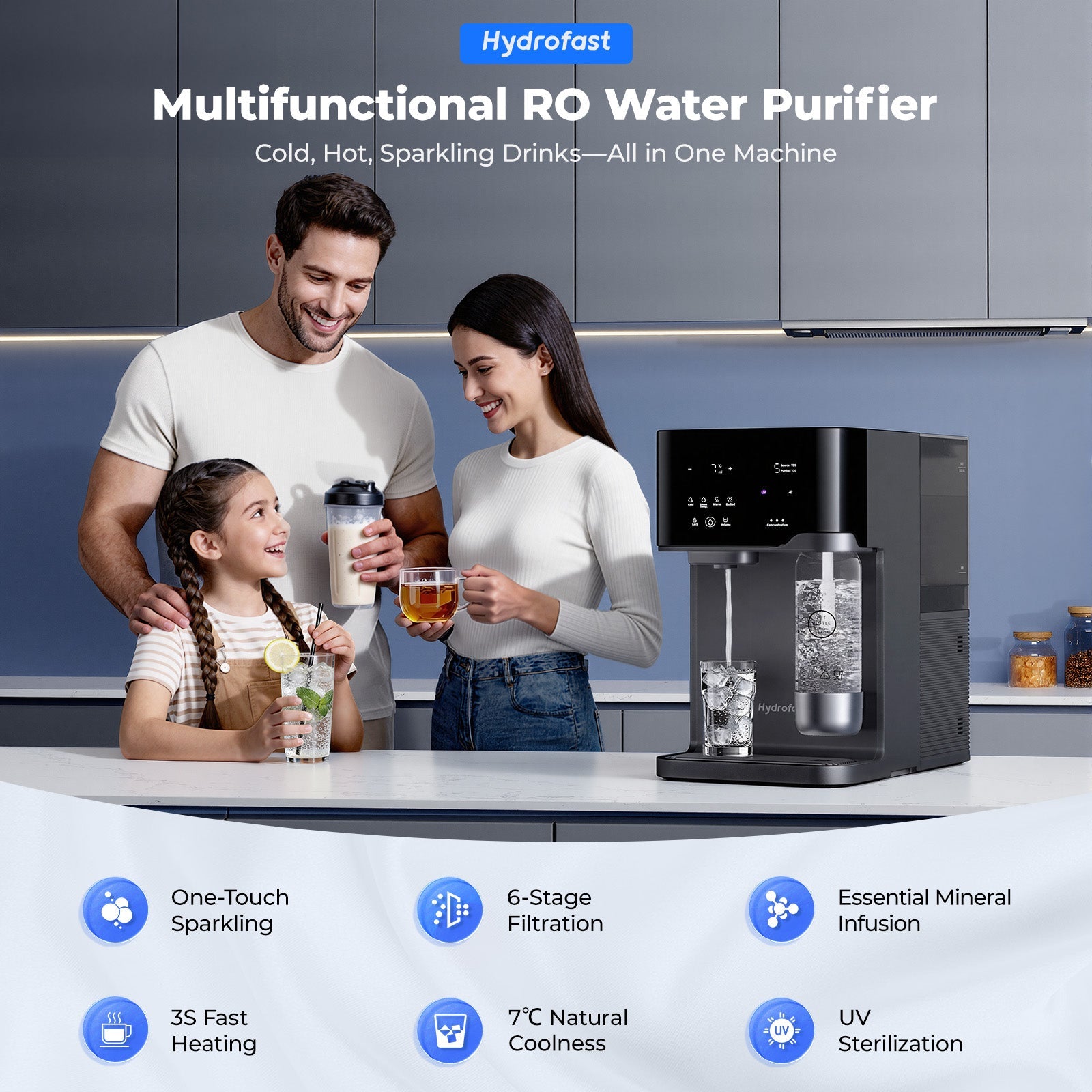
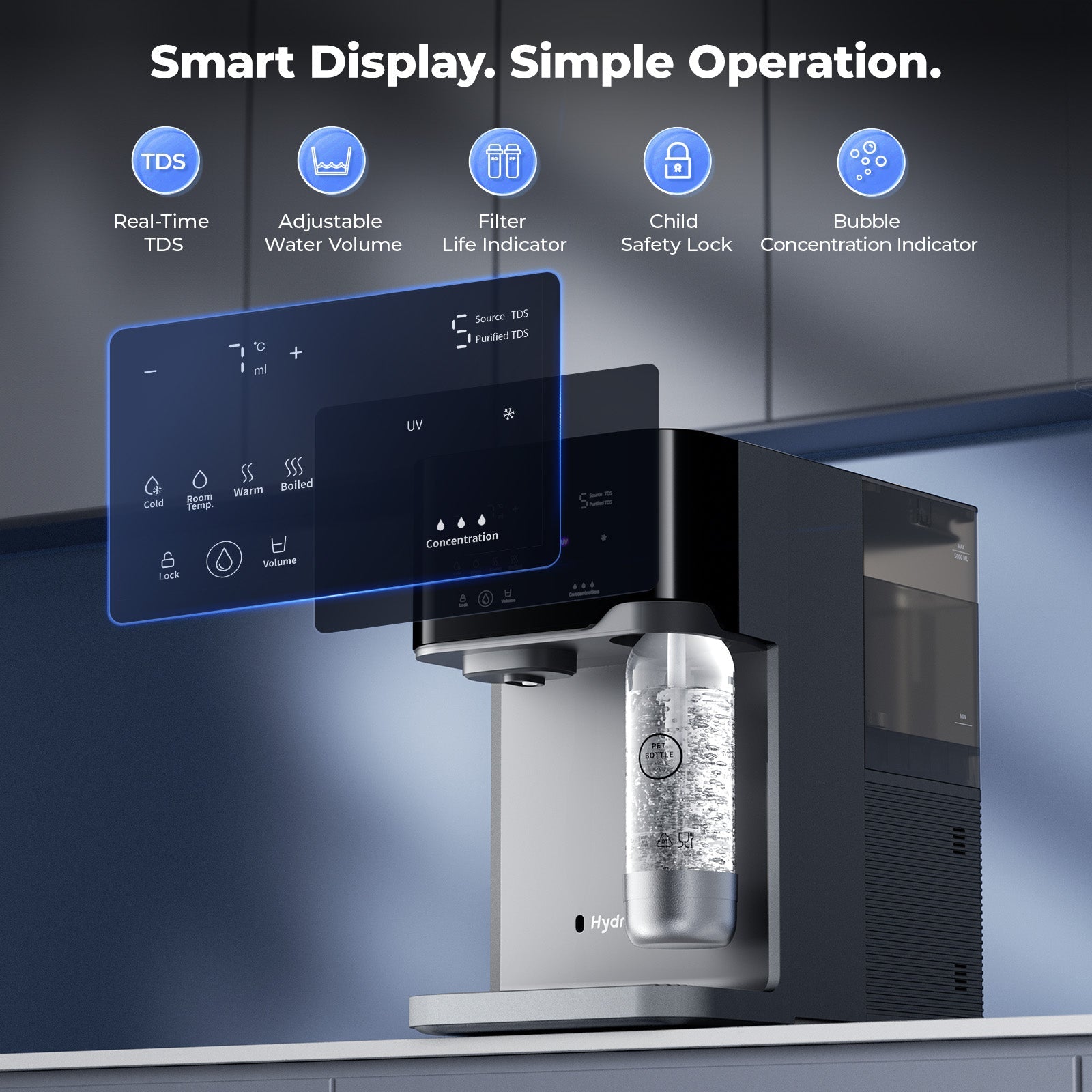
Systems such as the Hydrofast C300 go a step further. They combine RO filtration with chilled, hot and sparkling water.
What Are Microplastics in Bottled Water?
Microplastics are small plastic particles. They are generally defined as particles smaller than 5 millimetres.
Nanoplastics are even smaller. They can also be difficult to detect with conventional testing methods.
Unlike visible pieces of plastic, these particles cannot normally be seen, tasted or smelled. This makes them difficult for consumers to identify in everyday drinking water.
How Can Plastic Particles Get Into Bottled Water?
Plastic particles can enter bottled water at different stages of its lifecycle.
They may come from:
The bottle itself is not necessarily the only source.
Temperature and storage conditions may also influence how packaging materials interact with the water inside.
In everyday European life, bottles may sometimes be left in a warm car, on a balcony or in an unshaded storage area during summer. The amount of particle release can vary depending on the material and storage conditions. This is one reason these factors continue to be studied.
The key point is simple: plastic packaging does not guarantee that the water inside is completely free from plastic particles.
How Common Are Microplastics in Bottled Water?
Research in Europe and elsewhere has found plastic particles in bottled water.
However, the reported amounts vary significantly between studies. One reason is that researchers use different testing methods. They may also measure different particle sizes.
What Earlier Research Found
A widely cited 2018 investigation tested major international bottled-water brands. It reported plastic particles in the large majority of the samples.
The study brought public attention to an issue that many consumers had not considered before. Bottled water can contain microscopic plastic particles even when the bottle and water look perfectly clean.
However, these results should not be treated as a universal number for every product. Particle counts can vary depending on the water source, packaging and testing method.
Why Newer Testing Finds Much Smaller Particles
A 2025 study published in PLOS Water highlighted an important challenge in current testing methods. Researchers from institutions including CNRS and the University of Toulouse analysed ten PET bottled-water brands and one municipal tap-water sample. They detected microplastics as small as 1 μm. Across the samples, around 98% of the detected microplastic particles were smaller than 20 μm. Around 94% were smaller than 10 μm.
This matters because the methodology discussed in relation to the EU Drinking Water Directive framework focuses on particles between 20 and 5,000 μm. The study suggests that focusing only on larger particles may miss a substantial share of the microplastics present in drinking water. The important takeaway is not one universal particle count. Different testing methods can detect different size ranges of microplastics.
As analytical methods improve, researchers can identify smaller particles that earlier methods may have missed. This also makes direct comparisons between older and newer studies more difficult. At the same time, it shows why the scientific understanding of microplastics in drinking water continues to develop.
What Does Microplastic Research Mean for Family Health?
Research into microplastics is developing quickly. That makes it important to separate what scientists already know from what they are still investigating.
What Scientists Know So Far
People can be exposed to microplastics through food, drinking water and the environment. Researchers have also detected plastic particles in human biological samples, including blood. These findings confirm that human exposure occurs. However, they do not show how much health risk comes specifically from drinking-water exposure.
The World Health Organization has reviewed the available evidence on microplastics in drinking water. At the exposure levels investigated at the time, the evidence did not demonstrate a clear health risk. However, the WHO also identified major gaps in the research. Since then, scientists have continued to study how different particle sizes, shapes and materials may interact with biological systems.
What Scientists Are Still Studying
Important questions remain.
Researchers are still studying:
The responsible conclusion is not that microplastics are proven to cause a particular disease.
Instead, human exposure is real, but the full long-term health implications are still being studied.
Why Some Families Choose to Reduce Unnecessary Exposure
For families, this distinction matters. Children generally consume more food and water relative to their body weight than adults. Their bodies are also still developing. This does not mean microplastics are proven to be especially harmful to children. However, it helps explain why some parents prefer to reduce avoidable sources of exposure where practical.
In much of Europe, public tap water is subject to strict quality standards. It is suitable for everyday drinking. Many households still choose additional filtration. This does not necessarily mean they consider their tap water unsafe. Some want more control over their drinking water. Others have concerns about local water conditions or household plumbing. Some simply want to reduce their dependence on bottled water. You do not need to eliminate every possible environmental exposure to make a sensible change. Replacing part of your family's bottled-water consumption with filtered water at home is one simple option.
Microplastics Are Only One Part of the Water-Quality Conversation
Microplastics are not the only reason families may consider household water filtration.
Depending on the local water source and household plumbing, drinking water may also contain or come into contact with:
The exact situation varies by location and water source.
For this reason, a water-treatment decision should be based on actual water quality. It should not assume that every household faces the same problem.
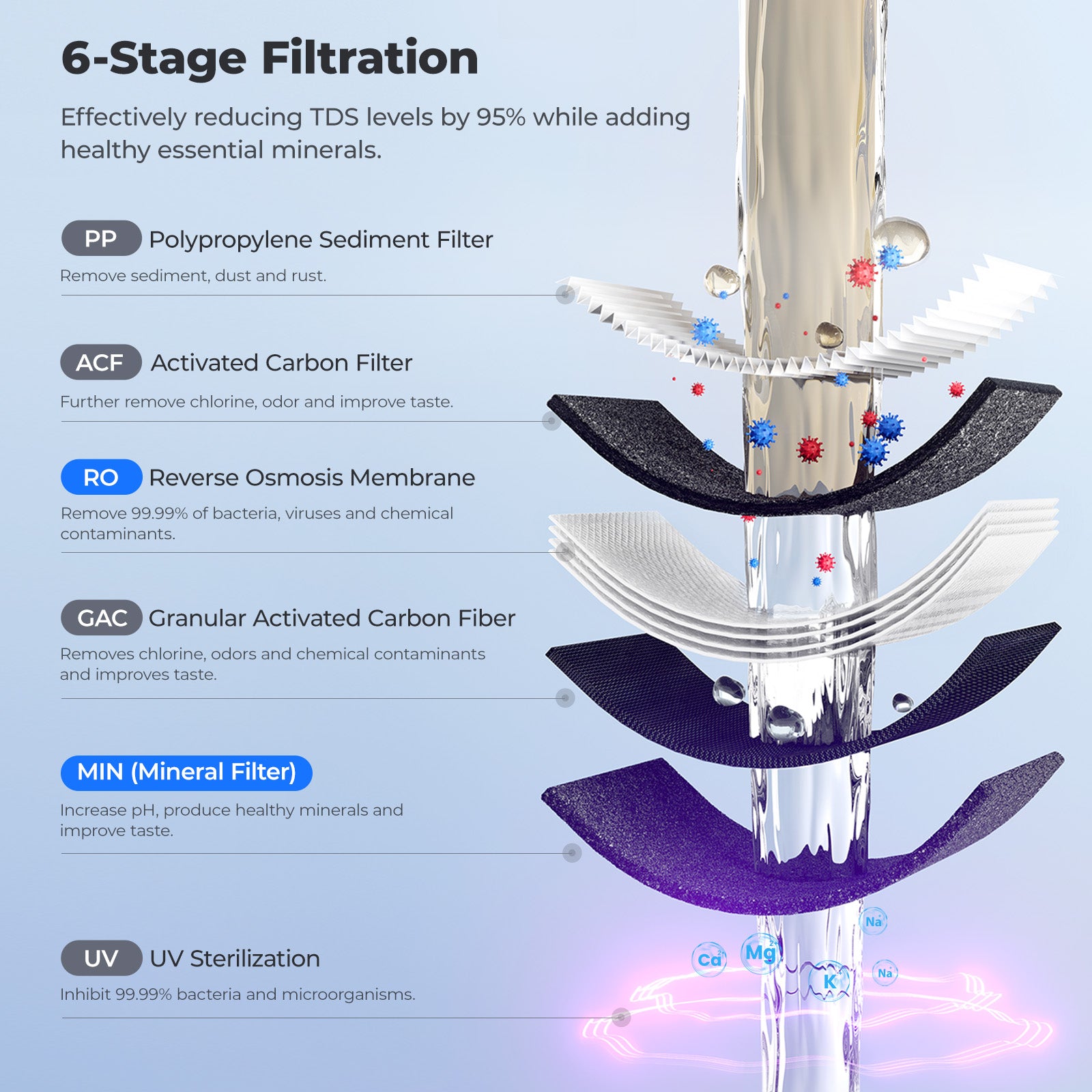
A multi-stage RO system can address a broader range of water-quality concerns than a basic particle filter.
How Reverse Osmosis Can Help Reduce Microplastics
Reverse osmosis is a membrane-based water-treatment process. It does not simply trap particles in the way a basic mechanical filter does. Instead, pressure pushes water through a dense separation layer.
How an RO Membrane Works
An RO membrane allows water to pass through while rejecting many dissolved substances and contaminants. It is not best understood as a simple sieve with one fixed "pore size."
Microplastic particles are much larger than the molecular-scale separation used in RO. Because of this, an RO system can act as an effective physical barrier for reducing these particles from the water stream. Actual performance depends on several factors. These include the membrane, system design, operating conditions and incoming water quality.
Can an RO Water Filter Remove Microplastics?
RO filtration can be an effective way to reduce microplastic particles in drinking water.
However, it is important to distinguish between the capability of RO technology and the tested performance of a specific product.
A manufacturer's exact removal rate should only be stated when supported by appropriate testing.
The same principle applies to other contaminants, including PFAS.
An RO membrane may reduce certain PFAS compounds. However, product-specific claims should be based on verified test data.
They should not be assumed simply because a product uses an RO membrane.
How Hydrofast C300 Helps Families Reduce Dependence on Bottled Water
For families, the value of an RO system is not only about filtration.
It is also about what you can do with the water after it has been filtered.
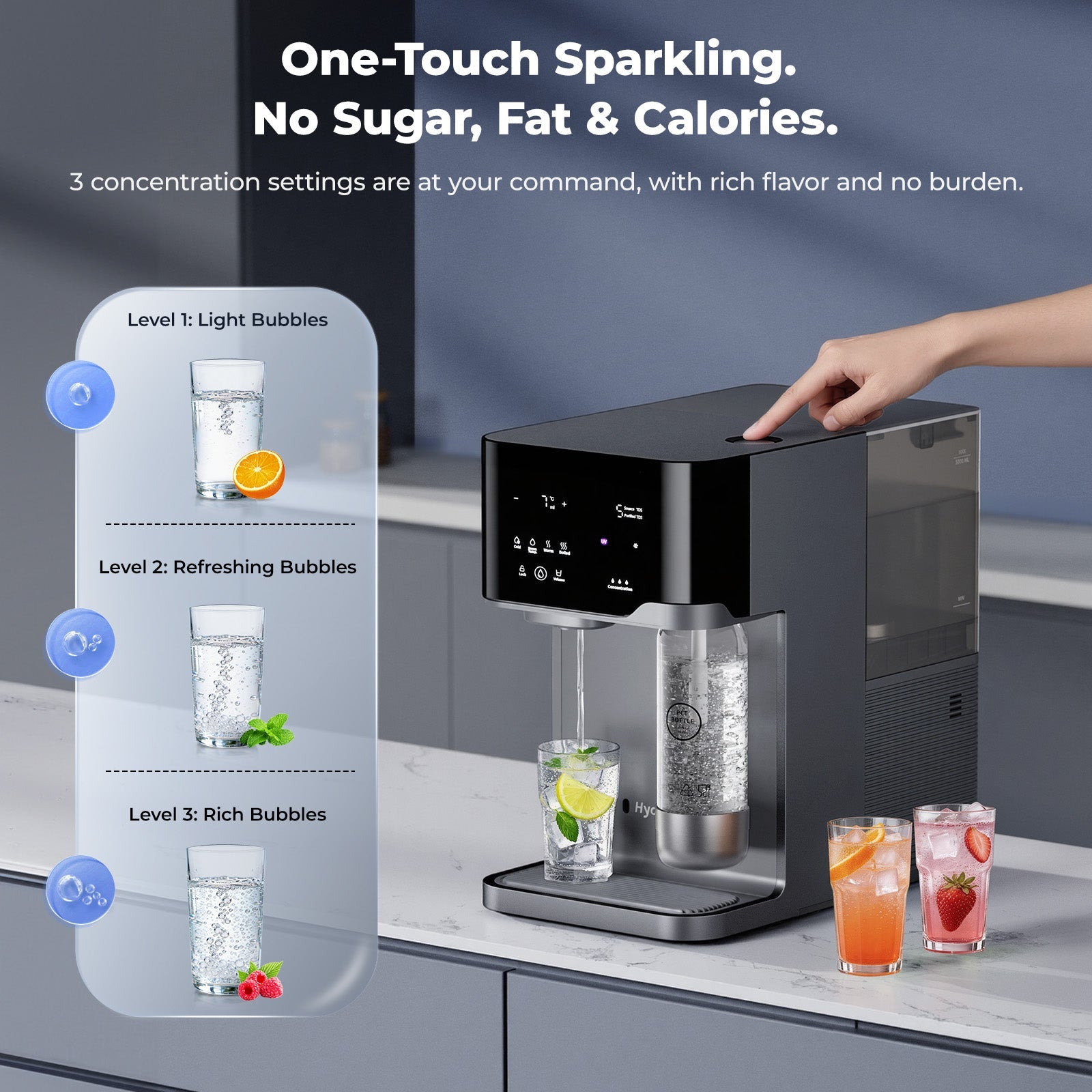
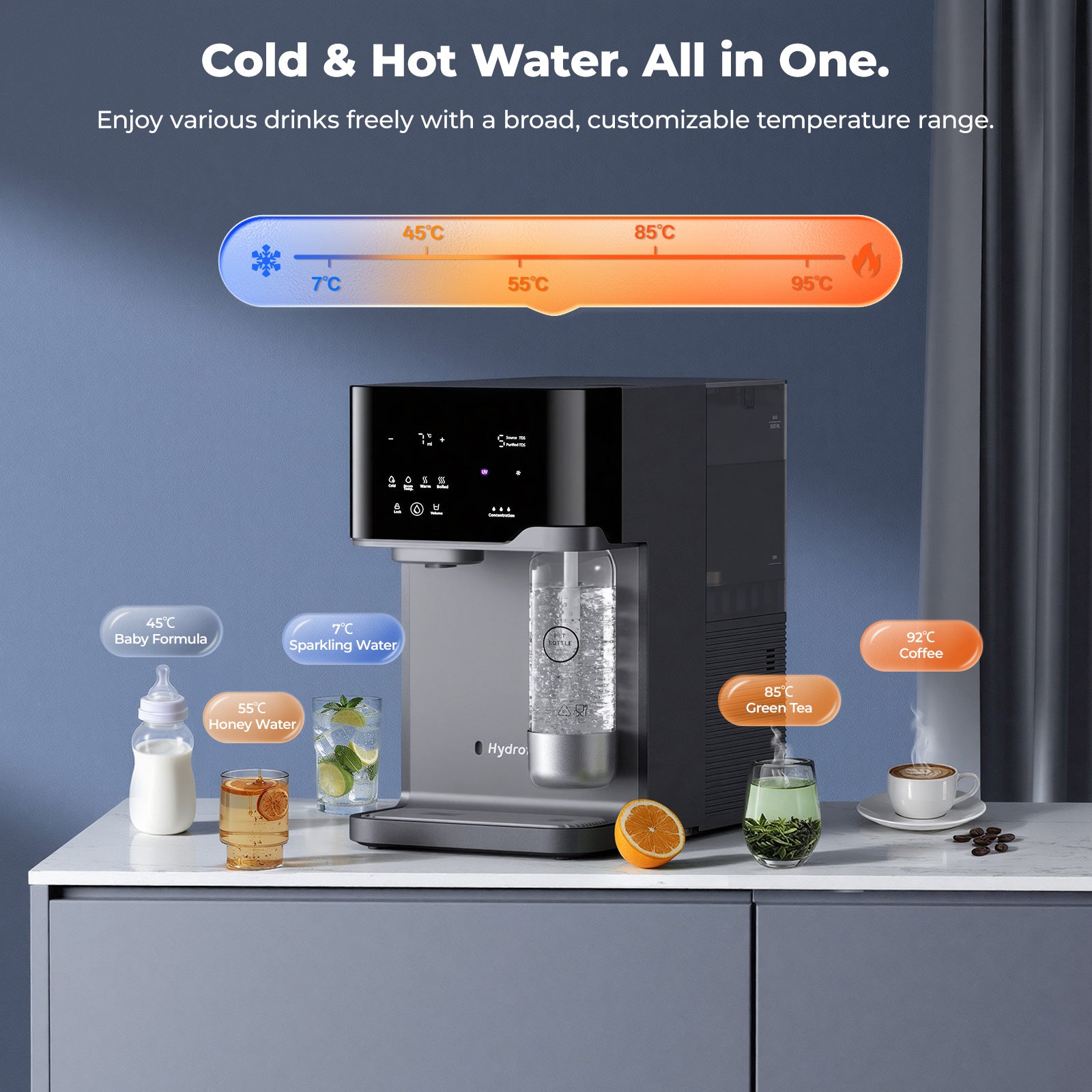
The Hydrofast C300 combines several everyday functions in one countertop system:
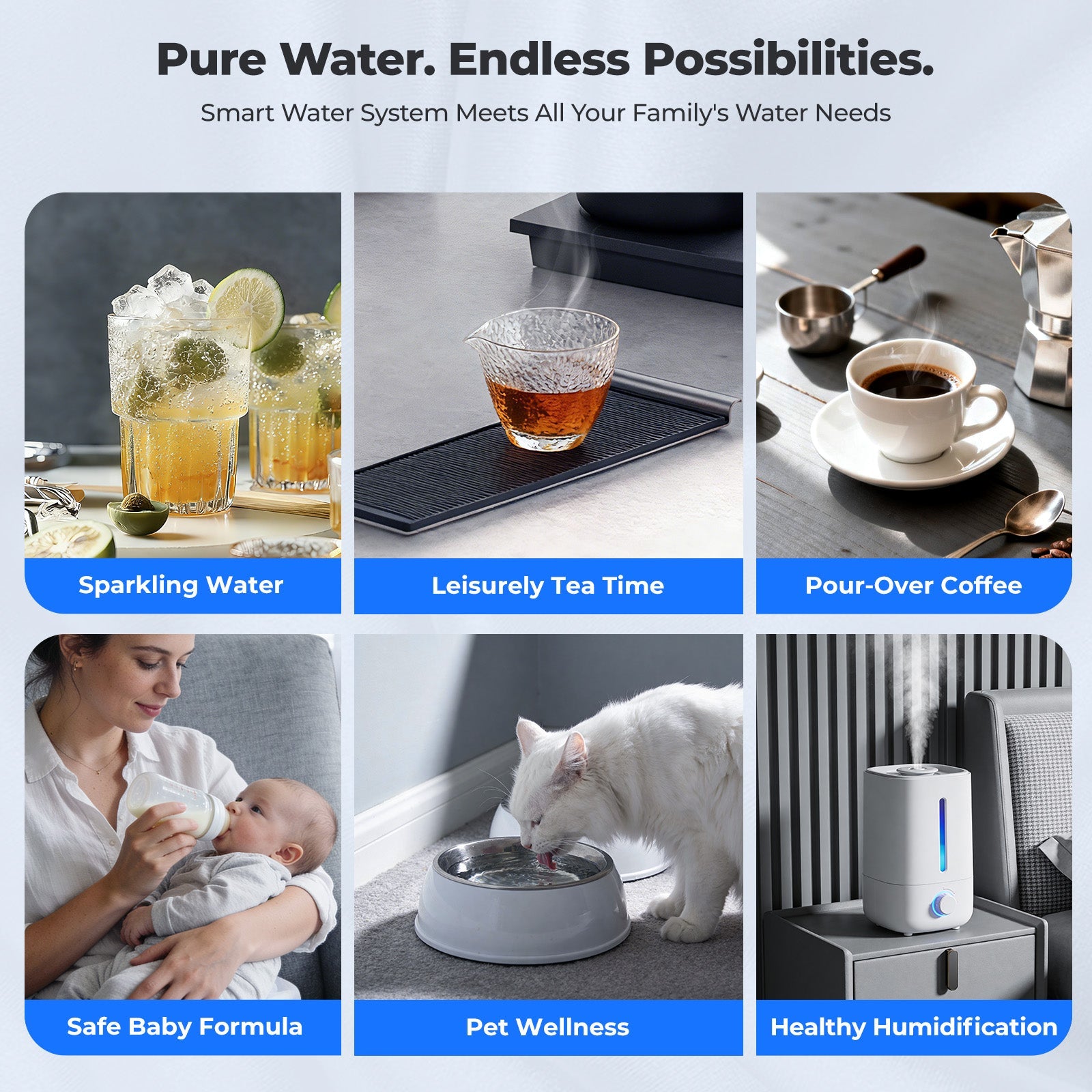
Instead of buying separate bottles of still and sparkling water, families can prepare more drinks at home.
Make Still and Sparkling Drinks at Home
C300 provides a filtered-water base for everyday drinking and homemade beverages. Sparkling water is part of daily life in many European households. Families may drink it on its own, mix it with juice or use it as the base for homemade drinks.
With filtered sparkling water available at home, you can make a lighter Apfelschorle-style drink. You can also prepare a fresh citrus sparkling drink for a summer meal. For something simpler, try sparkling water with cucumber, mint and lime. You can adjust the amount of juice or other ingredients to suit your family's preferences.
The benefit is not that every homemade drink is automatically healthier. It is that you control what goes into the glass. Making drinks at home can also reduce the number of ready-to-drink bottles your household needs to buy, carry and store.
Is a Home RO System Worth It for Your Family?
The answer depends on how your household currently buys and consumes drinks.
Look Beyond the Price of One Bottle
The price of one bottle may seem small. However, regular purchases can add up over time. This may include:
There are also indirect costs.
You need space to store bottles. You also need to carry them home and manage the empty packaging.
A home water system changes this spending model.
Instead of repeatedly buying bottled water, you pay for the system and its ongoing consumables. You then produce drinking water at home.
When Does a Home System Make Financial Sense?
The break-even point depends on several factors.
These include household size, consumption, local bottled-water prices and ongoing operating costs.
In Hydrofast's European household cost model, a high-consumption German household could reach an estimated break-even point in around 18–19 months.
This estimate compares the C300 purchase price and ongoing consumables with the household's existing beverage spending.
It is a modelled example, not a universal payback period.
A different household may reach the break-even point sooner or later.
The result depends on consumption, local bottled-water prices and ongoing costs such as filters and CO₂.
One System, Multiple Beverage Needs
The C300 does more than replace a bottle of water. It combines several common beverage functions:
RO filtration + chilling + hot water + sparkling water
For households that regularly buy bottled water and sparkling drinks, this can reduce the number of products they need to purchase. It can also reduce the amount of bottle storage required at home.
Bottled Water vs. Home RO: Which Makes More Sense for Your Family?
| Factor | Bottled Water | Home RO System |
|---|---|---|
| Plastic bottles | Repeated purchases | Greatly reduced |
| Water filtration | Depends on the product | Household filtration |
| Sparkling water | Buy separately | Available at home with C300 |
| Storage | Requires bottle storage | No bottle stockpile |
| Transport | Repeated shopping trips | No regular bottle carrying |
| Ongoing cost | Recurring purchases | Equipment + consumables |
| Drink ingredients | Depends on the product | Controlled at home |
Neither option is automatically right for every household.
The better choice depends on your family's water quality, consumption habits, budget and priorities.
For households that want to reduce bottled-water dependence and have more control over everyday drinking water, a countertop RO system can be a practical alternative.






Leave a comment
All comments are moderated before being published.
This site is protected by hCaptcha and the hCaptcha Privacy Policy and Terms of Service apply.